
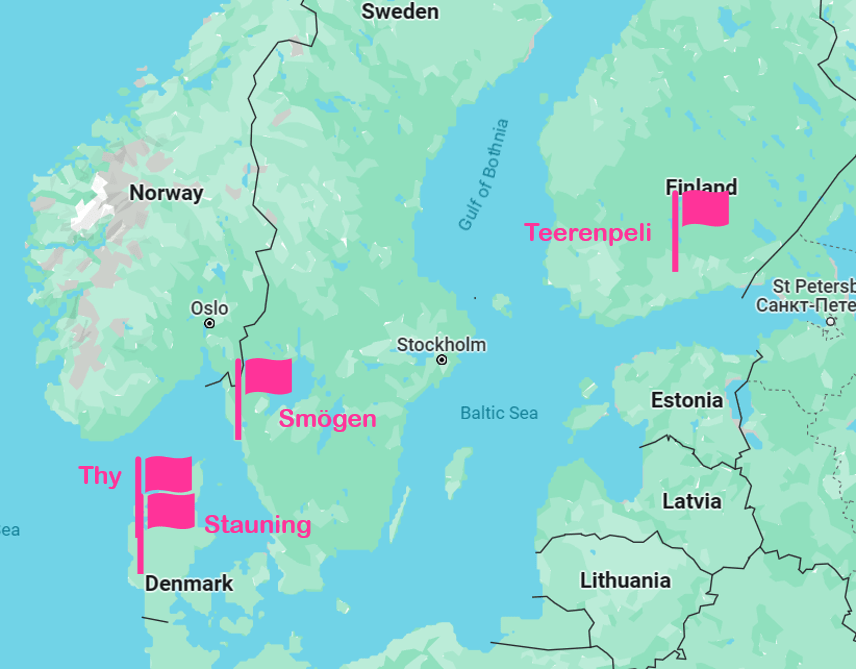
For being a Swede and a whisky geek, I’ve tried embarrassingly little whisky from the Nordic countries, where, just like in Scotland, distilleries have been popping up like zits on a teenager’s greasy mug. Indie bottler Berry Bros. have released some rather exuberantly prices bottles in the Nordic casks range, but I got my hand on a 4x2cl tasting kit for around €20.
We have here two Danish distilleries, Stauning (founded 2005) and Thy (2010). Stauning was the first whisky distillery to open in Denmark, and I’ve heard about them but not tried. Thy was unknown to me. From Finland, Teerenpeli (2010), which apparently means courtship of the black grouse. The Swedish Smögen (2010), has been on my radar. Nu kör vi!
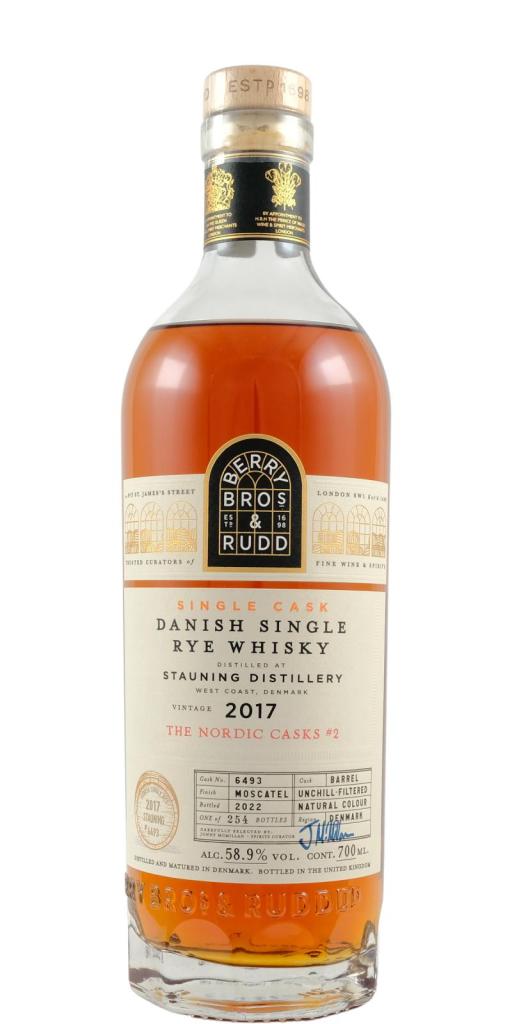
Stauning | 4yo (2017) | 58.9% | Berry Bros. & Rudd
🌐
🪵
🔆
💲
🔗
Sample review
⚡Experience
Rich and warming nose. Cherries and strawberries, marzipan, roasted coffee and Belgian ale, maple syrup. There are prominent wood notes (saw-dust) and an abashed rye-grain character. The palate matches well with the nose: spicy wood and grain notes, sweet yet drying mouthfeel with some tannins, and a jammy fruitness. Along the flavours I finds liquorice, cinnamon and cardamom
💡Thoughts
It’s really nice. Rather than a sherry-bomb single malt, I could have this that’s less overfamiliar, and just as intense.
Note: I did this semi-blind. I’ve heard of the distilleries but did not look them up before trying the samples, and I also didn’t match the sample to the glass before writing the tasting notes. I’m pleased that I so readily identified this as a rye whisky. I had some training with the Kyrö!
Rewarding
✔️
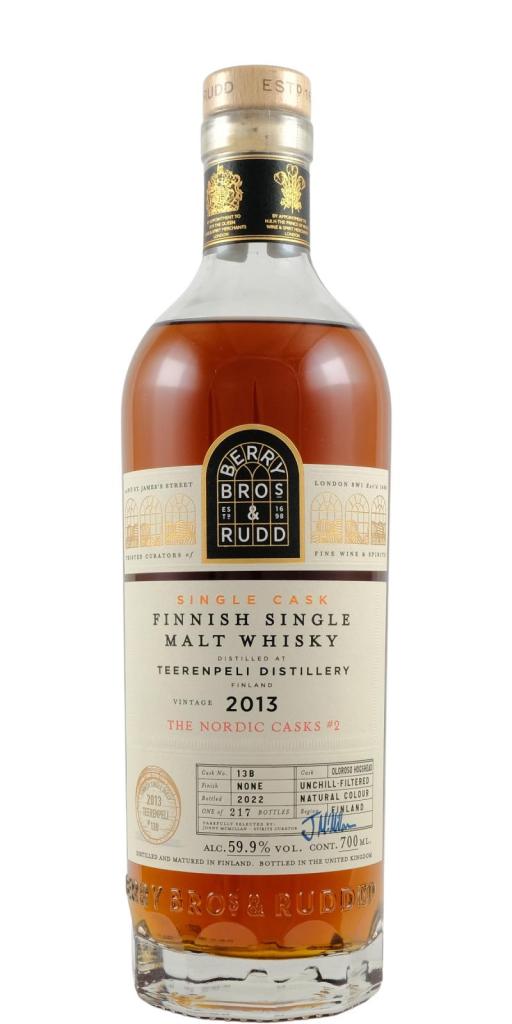
Teerenpeli | 2013 (bott. 2022) | 59.9% | Berry Bros. & Rudd
🌐
🪵
🔆
💲
🔗
Sample review
⚡Experience
Intense butterscotch on the nose. And ginger ale, ginger bread, ginger (you get the point). There is mix of herbal notes coming though too, along with dirt track road, and a hint of burnt rubber. The palate relatively sweet and buttery, bready, and with a phenolic hit after a few seconds. Knäckig finish.
💡Thoughts
Good malt, maybe a bit too heavy on the butterscotch, but there are a few more surprising note to break things off.
The price is ludicrous, though.
Rewarding
✔️
⛔Overpriced
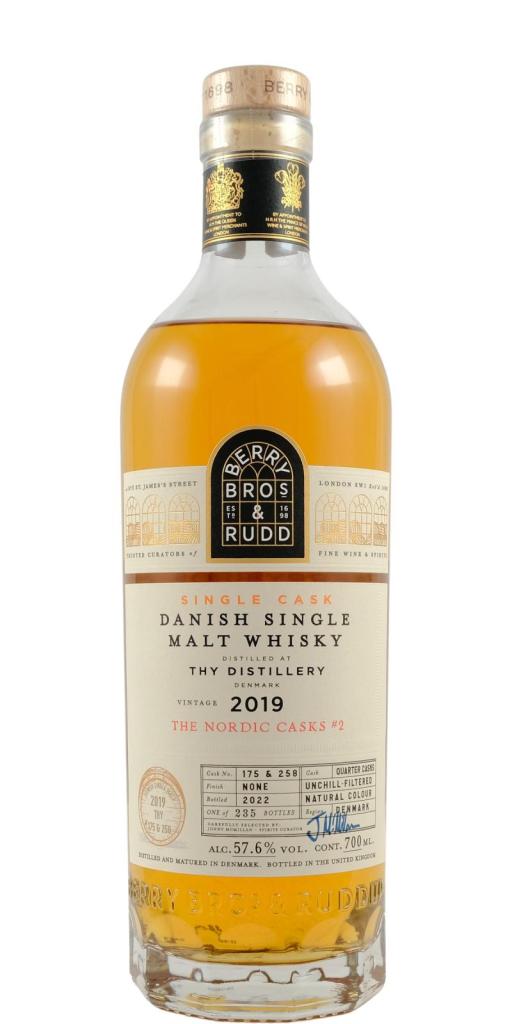
Thy | 2019 (bott. 2022) | 57.6% | Berry Bros. & Rudd
🌐
🪵
🔆
💲
🔗
Sample review
⚡Experience
Is this even whisky? It’s smells like gin. Herbal, floral and medicinal, with juniper berries, aniseed, violet. Add to that a pronounced smokiness and brine. Concentrating, I find also a vanilla note and light lemon meringue. The taste is as unusual as the nose, really bringing to mind juniper, smoke-dried game meat, and a feeling of being in a Nordic forest in winter… Finish is on the rough and bitter side.
💡Thoughts
It’s actually not bad, but here we’re really far from what I expect for a whisky, and closer to a really good Nordic snaps. It’s difficult to judge therefore, and I reckon it’ll be a polarizing experience. Personally, I’m curious enough about the novelty to have enjoyed trying it, but had I been given a full bottle I would not often visit it.
Rewarding
✔️
⛔Too weird?
⛔Overpriced
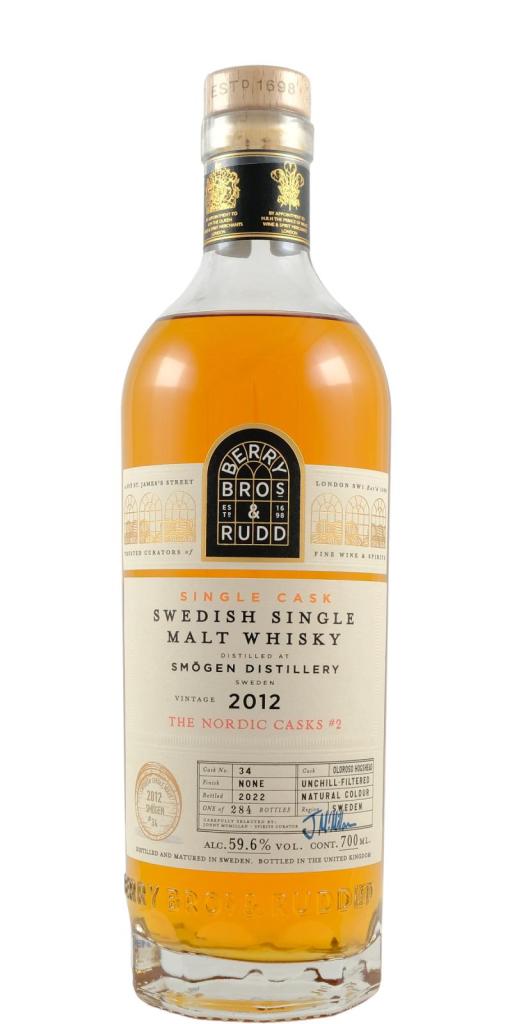
Smögen | 2012 (bott. 2022) | 59.6% | Berry Bros. & Rudd
🌐
🪵
🔆
💲
🔗
Sample review
⚡Experience
Lively nose, with citrus, coastal spray, a hint of pineapple and coconut. Palate: a bright impression, with a balance of sweetness and intense peat, and flavours of apricot, mandarin, hard bread, roasted nuts, coffee. The peat has a herbaceous quality that comes out in the finish, not unlike a Jura, say, but less distinctive.
💡Thoughts
To me this could certainly rival Islay drams of similar style, like a Caol Isla or Lagavulin. Perhaps that makes it less unique and interesting than the other drams in the Nordic cask series, but on the other hand rivalling good Scotch is an unmistakable sign of quality that goes beyond just novelty. The Oloroso is essentially invisible here, but this is not a bad thing.
That said, why pay nearly €200 for this when one can pick up a comparable Caol Ila for €70?
Rewarding
✔️
⛔Overpriced
In conclusion, the North knows how to make whisky too. In this tasting, the Finns and the Danes deliver interesting experiences with unusual characters (for my palate, at least), while the Swede shows that not only Scotland can produce something that, in a blind tasting, could pass for good-quality Scotch. But man, the price tags are comical.
 DuckDrams
Leave a comment