

With a good night’s rest after the first day of the Islay trip we were ready for some tours and tastings!
Intimate tour at Islay Rum
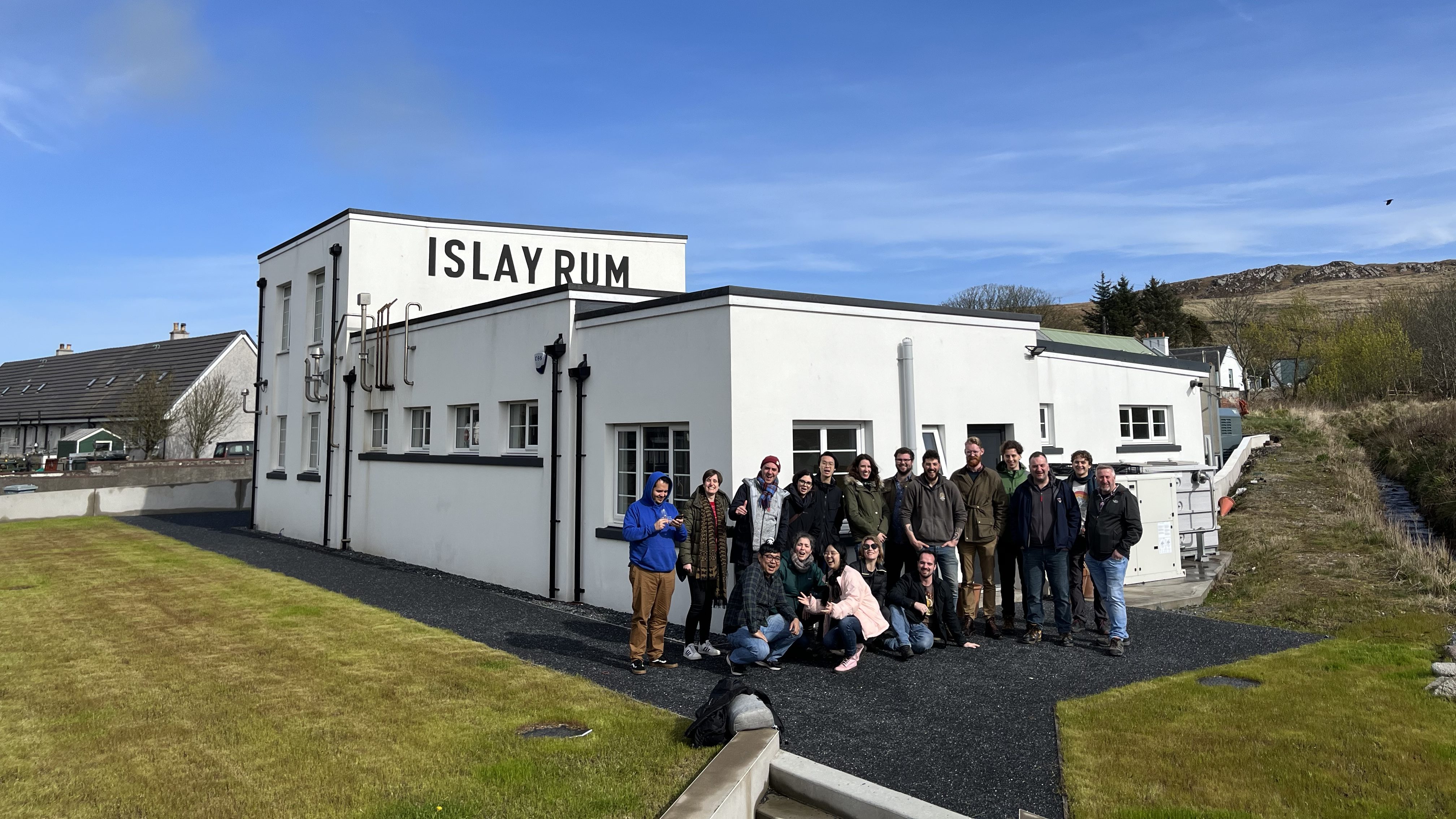
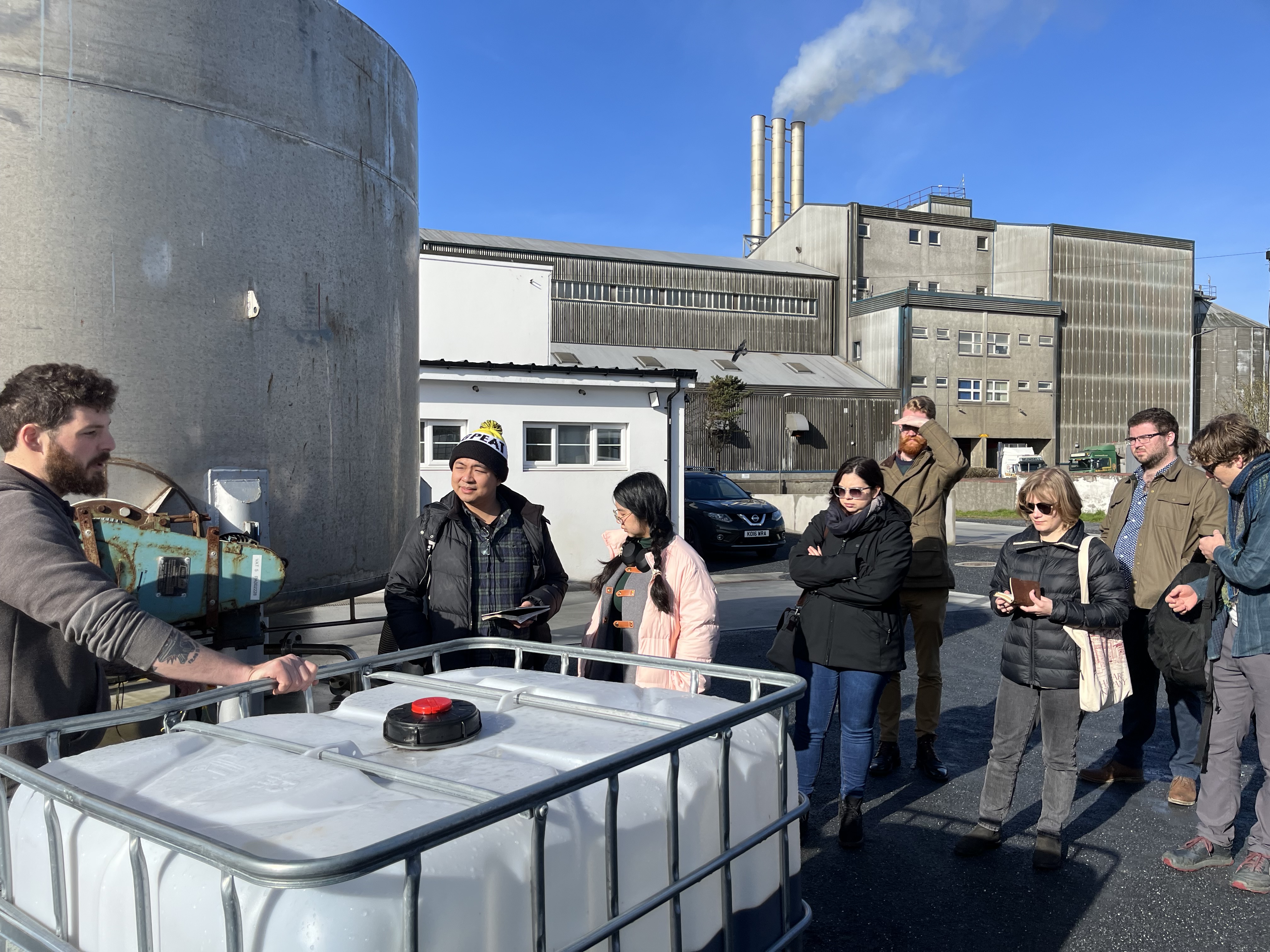
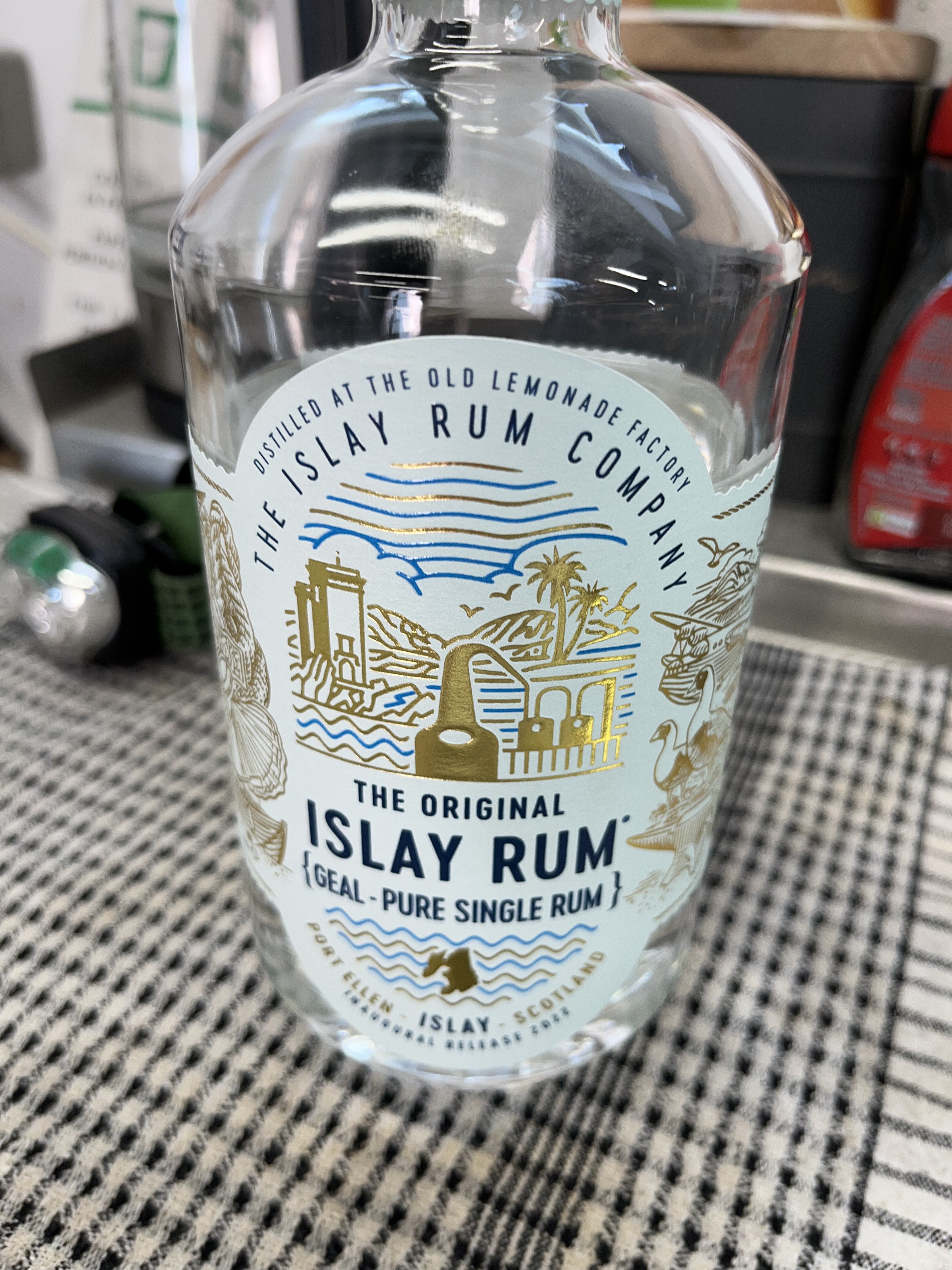
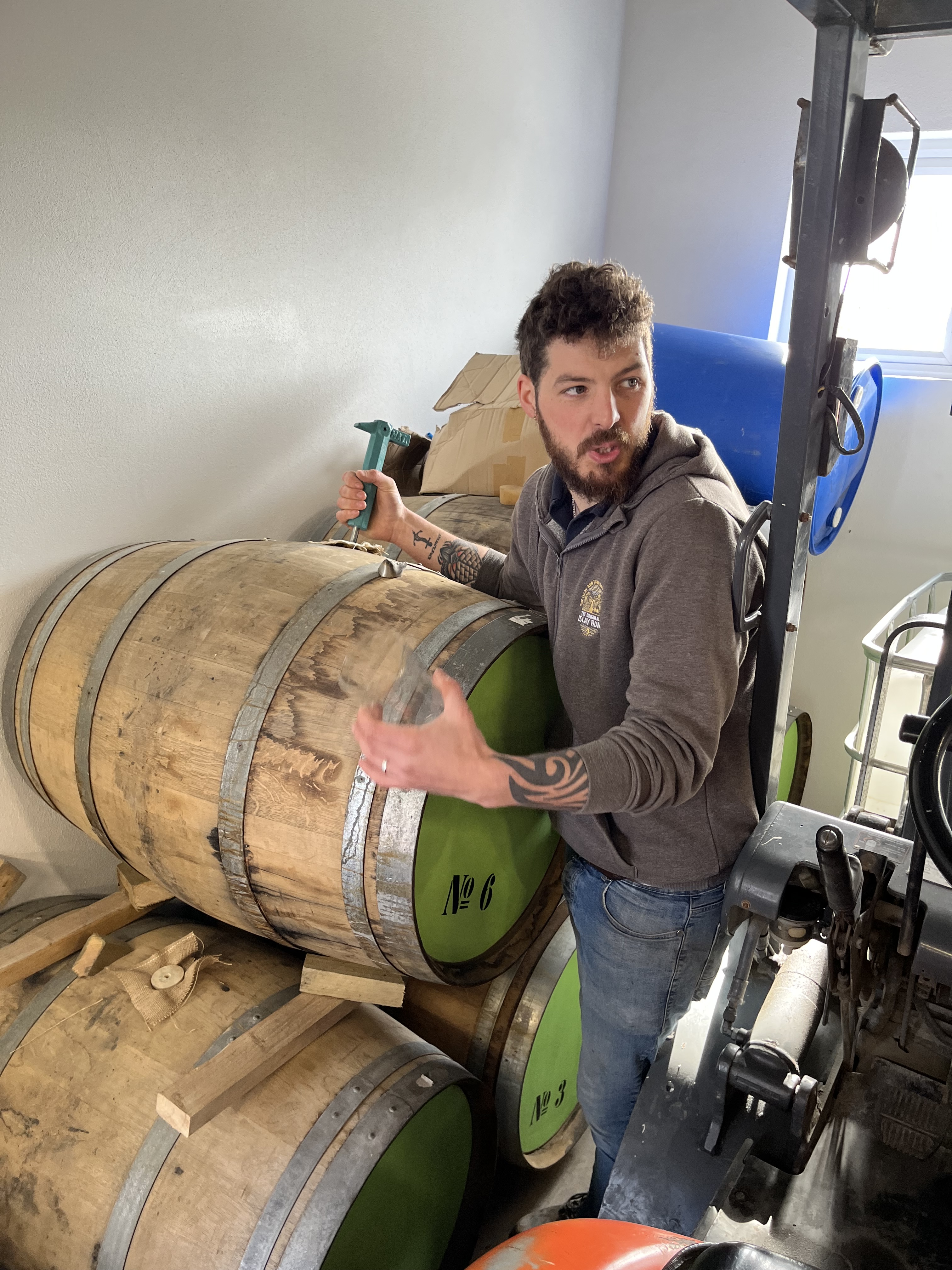
Our destino número uno was the old lemonade factory in Port Ellen. But since 2022, a very special lemonade is made there; one which makes you funny when you drink it, and in the mood to plunder some frigattes. Aye, it be rum. We received a very nice tour of the distillery by the friendly master distiller, Ben. While rum has yet to enchant me the way whisky has, I certainly found it interesting to learn about the similarities and differences in its making (and taste) as compared whisky.
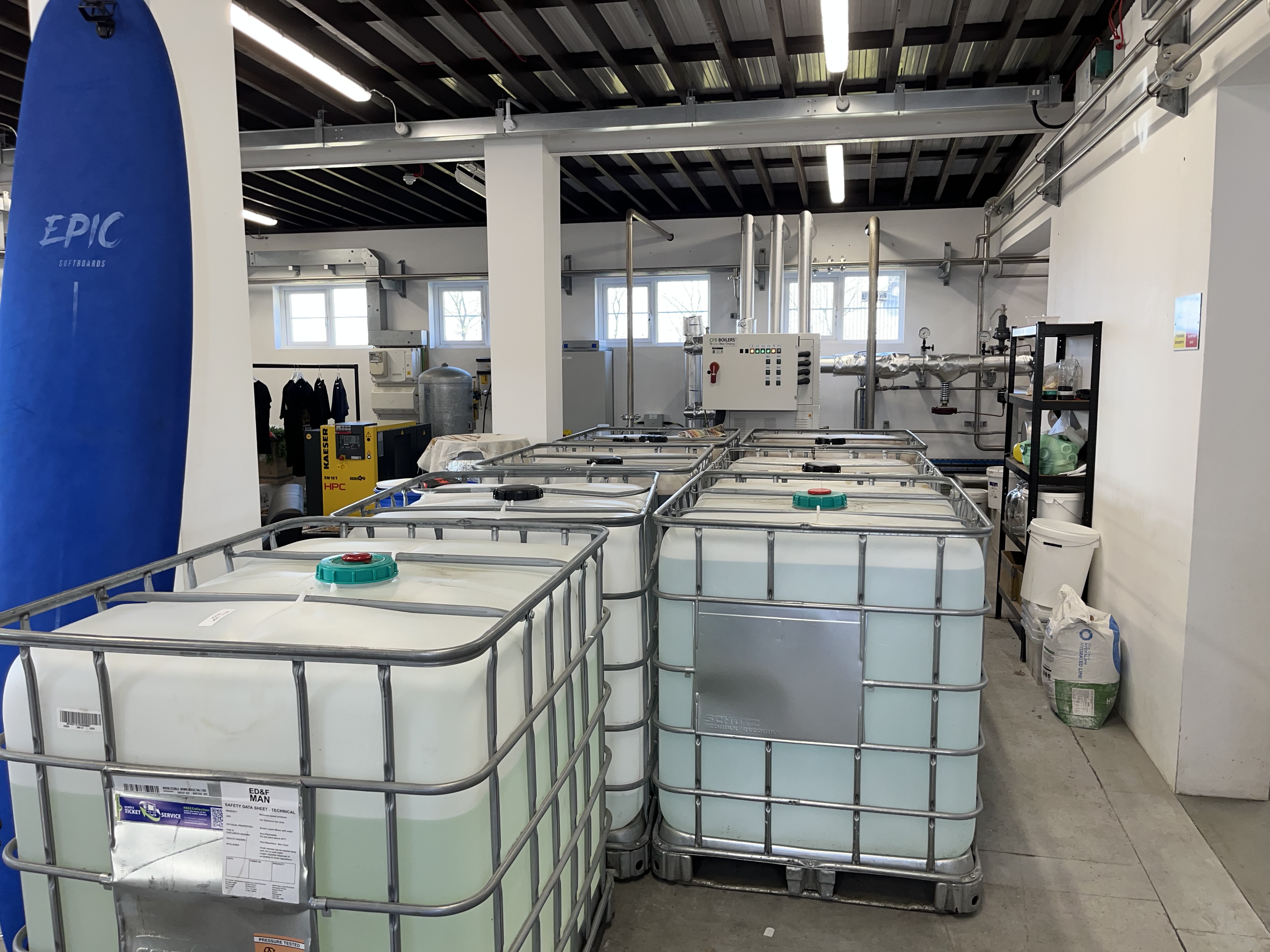
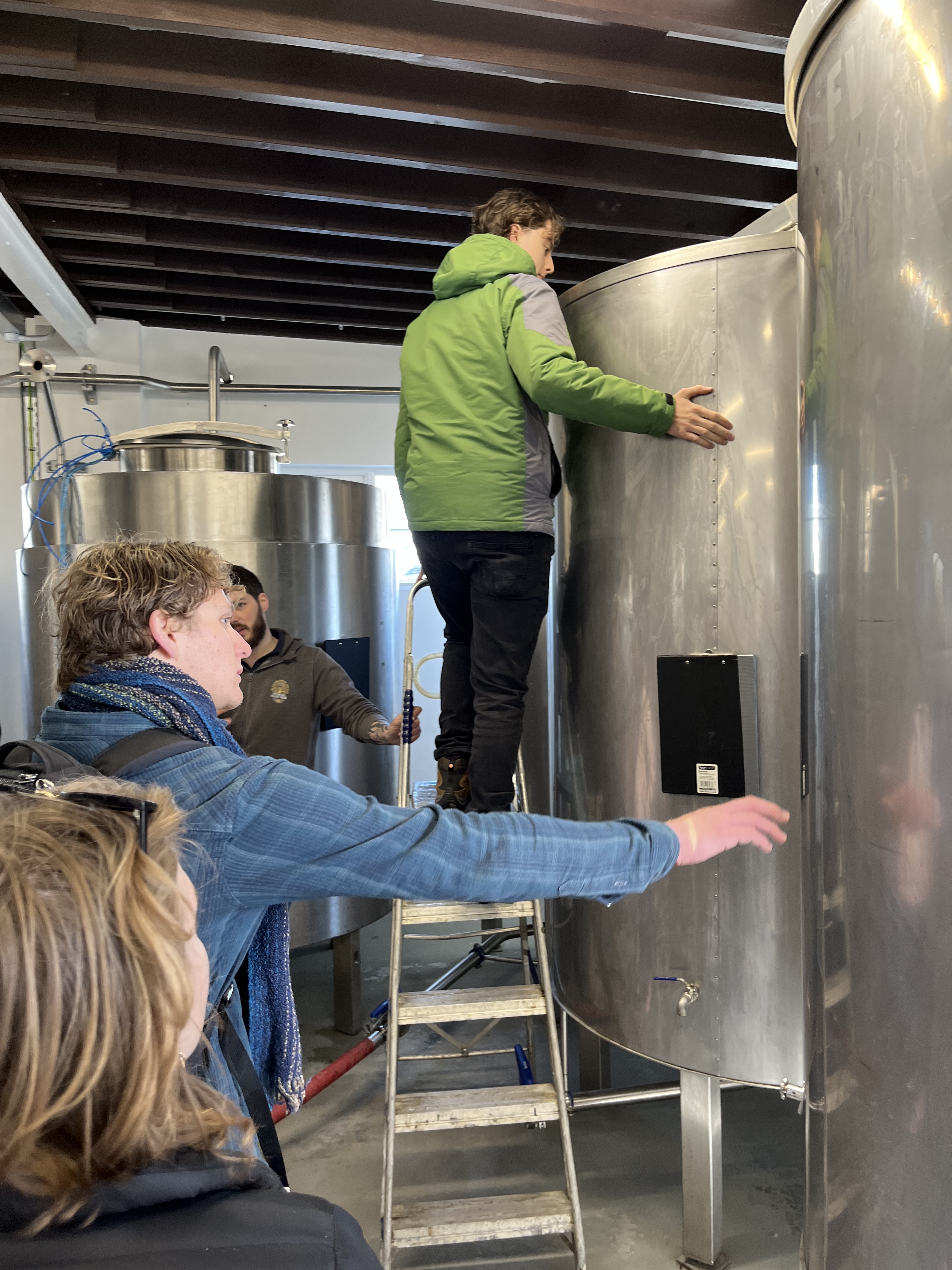
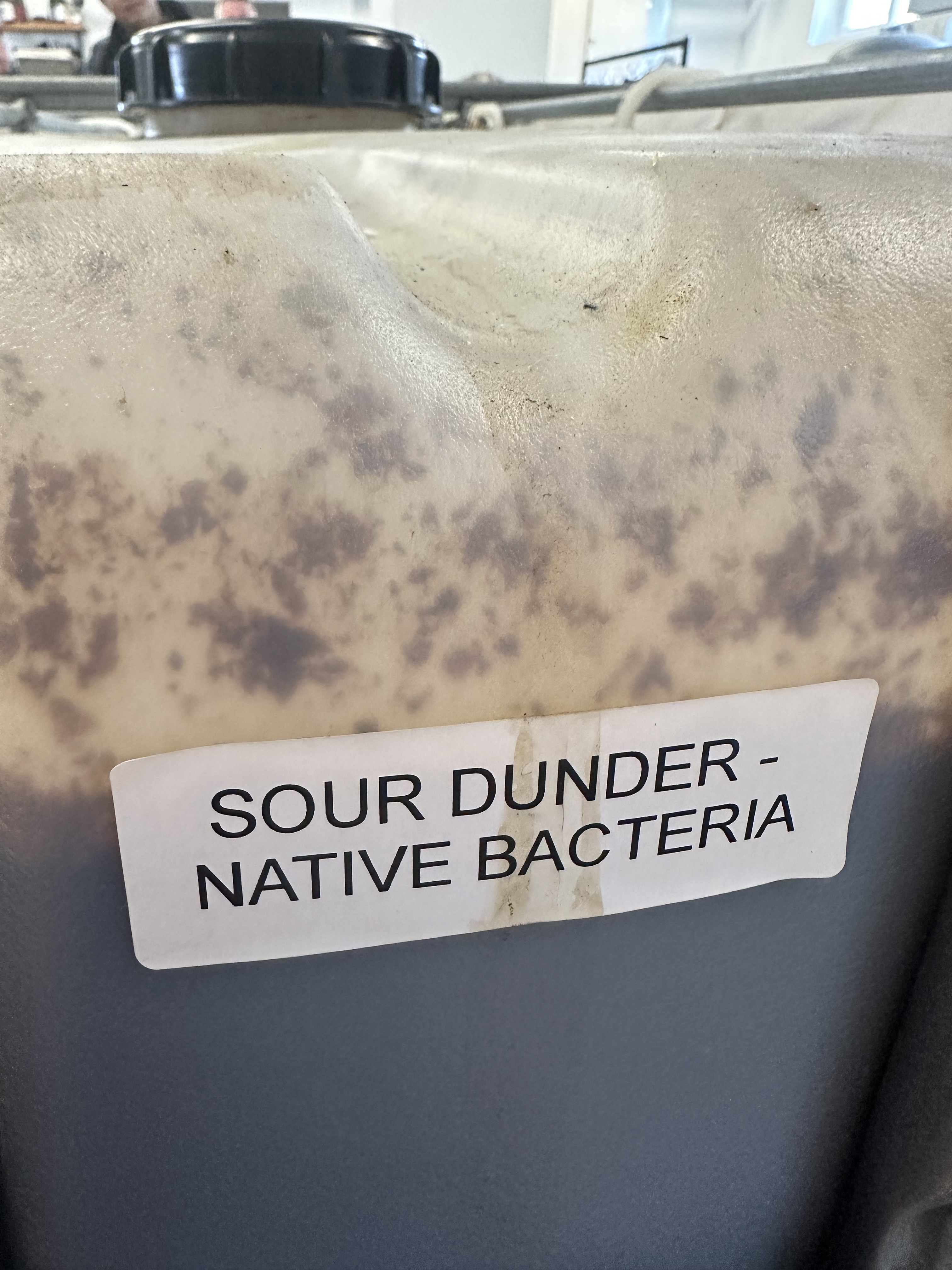
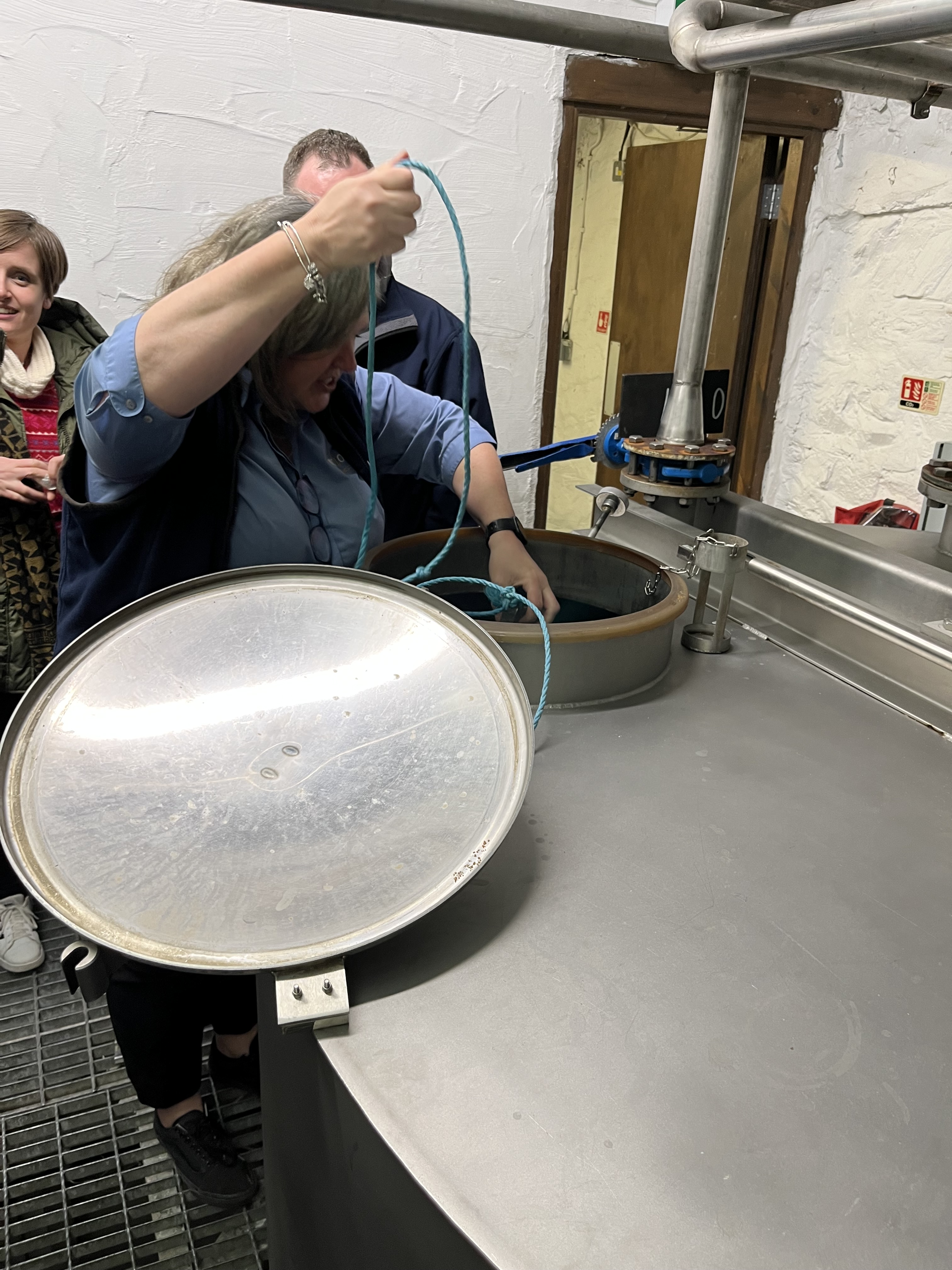
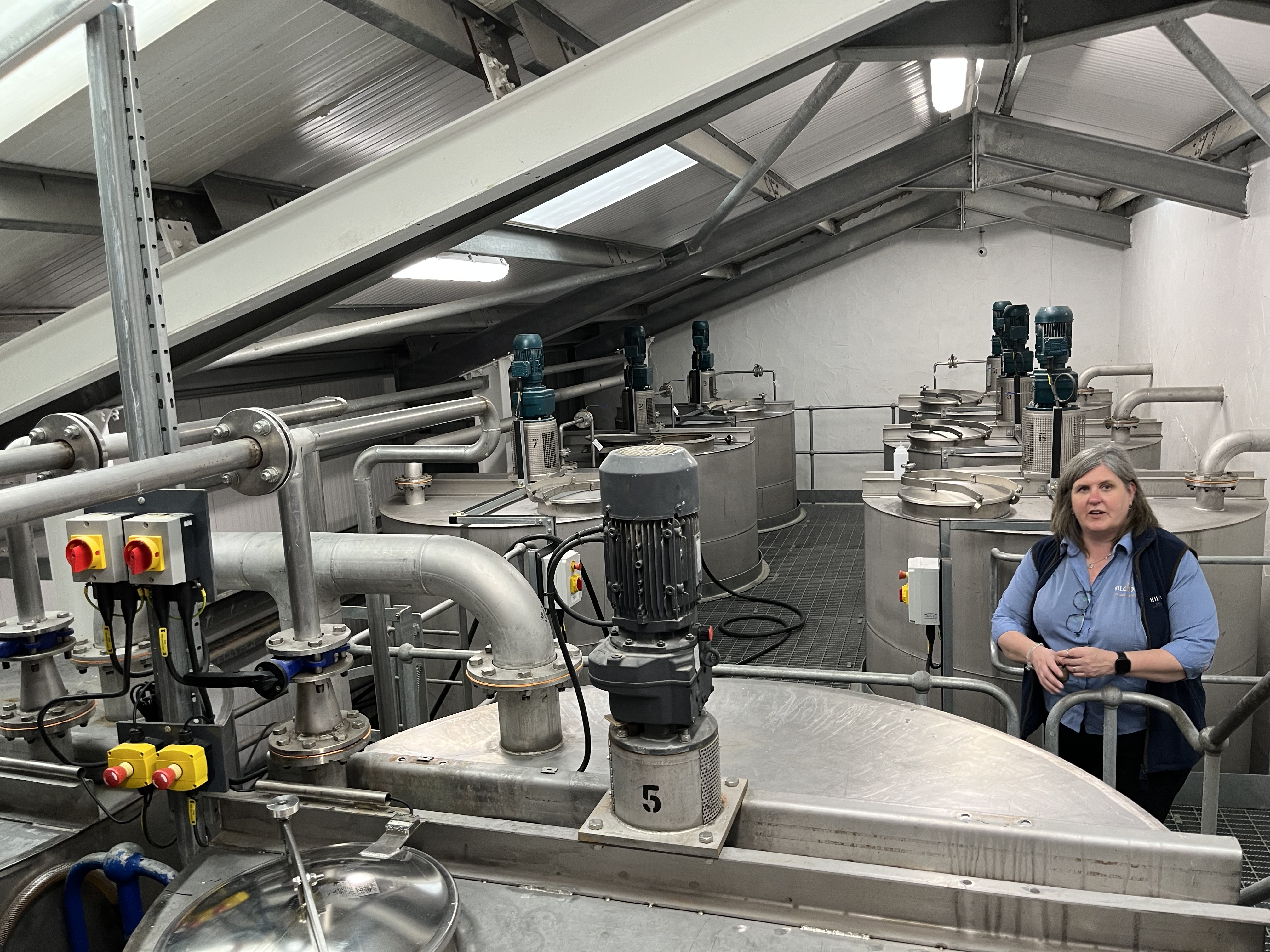
Rum is made from molasses, a kind of sticky, sweet residue left in the process of making refined sugar from sugar cane. (The molasses come in the big plastic tanks below). The molasses are fermented in steel tanks to produce a wash with around 7% alcohol. Naturally, we wanted to sample some. Quite awful, it was. Very bitter! In my notebook I scribbled down liquorice, chicken broth, soy sauce. I believe they were also experimenting with other microbes in the fermentation (but not the batch we tested). Apparently some strain of the Clostridium bacterium produces vomit-smelling butyric acid which after distillation forms an ester with a lovely pineapple smell.
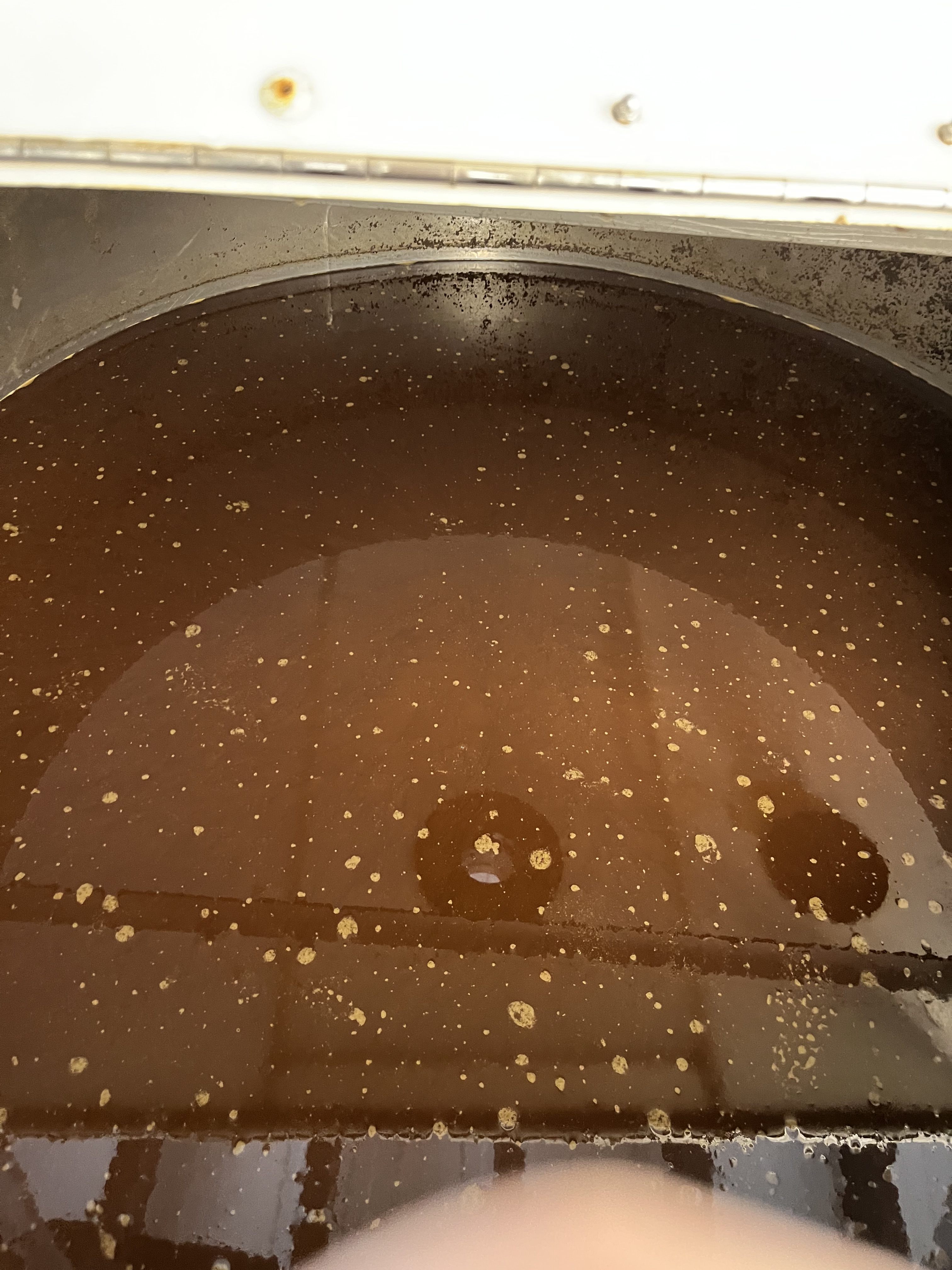
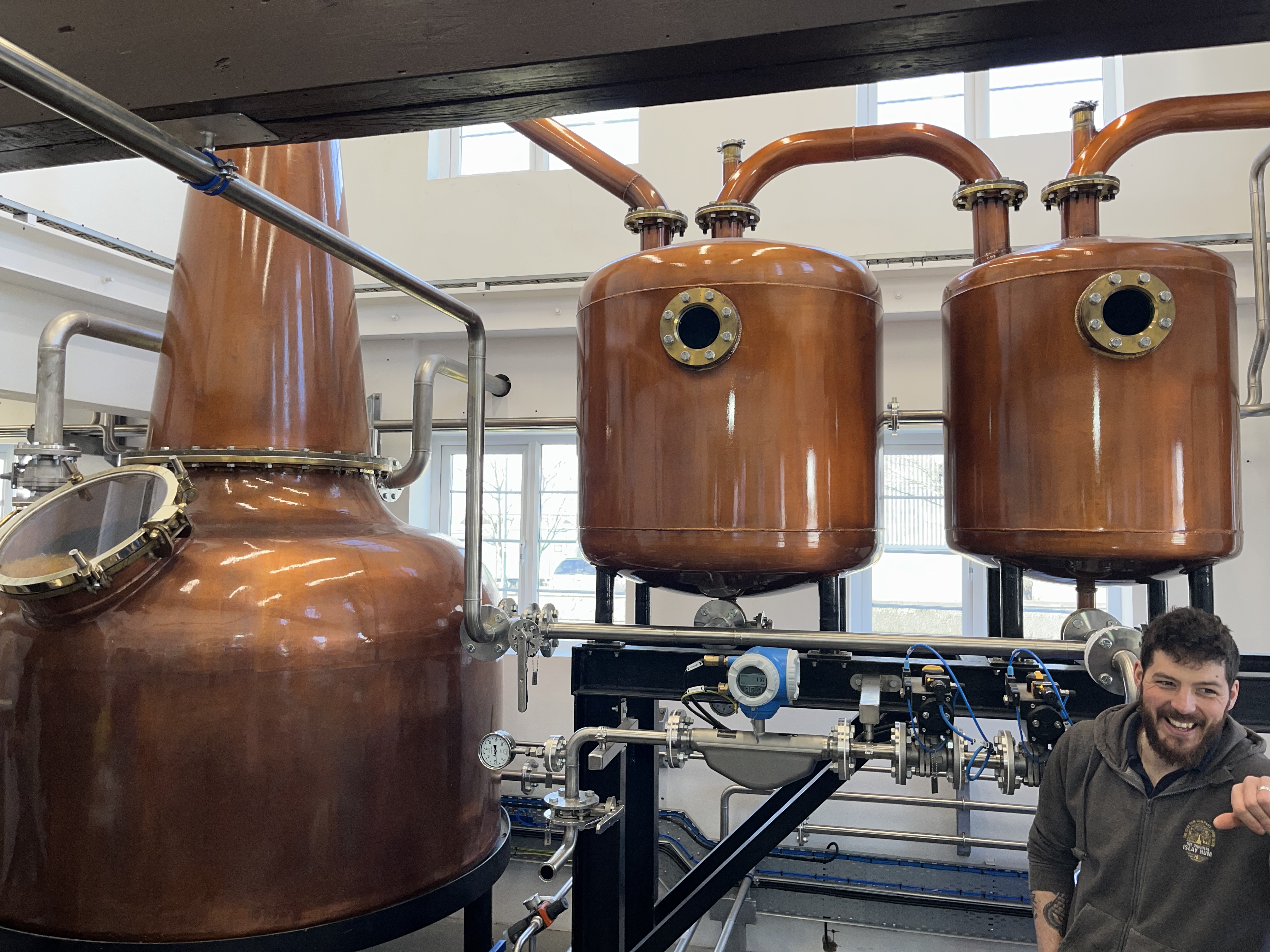
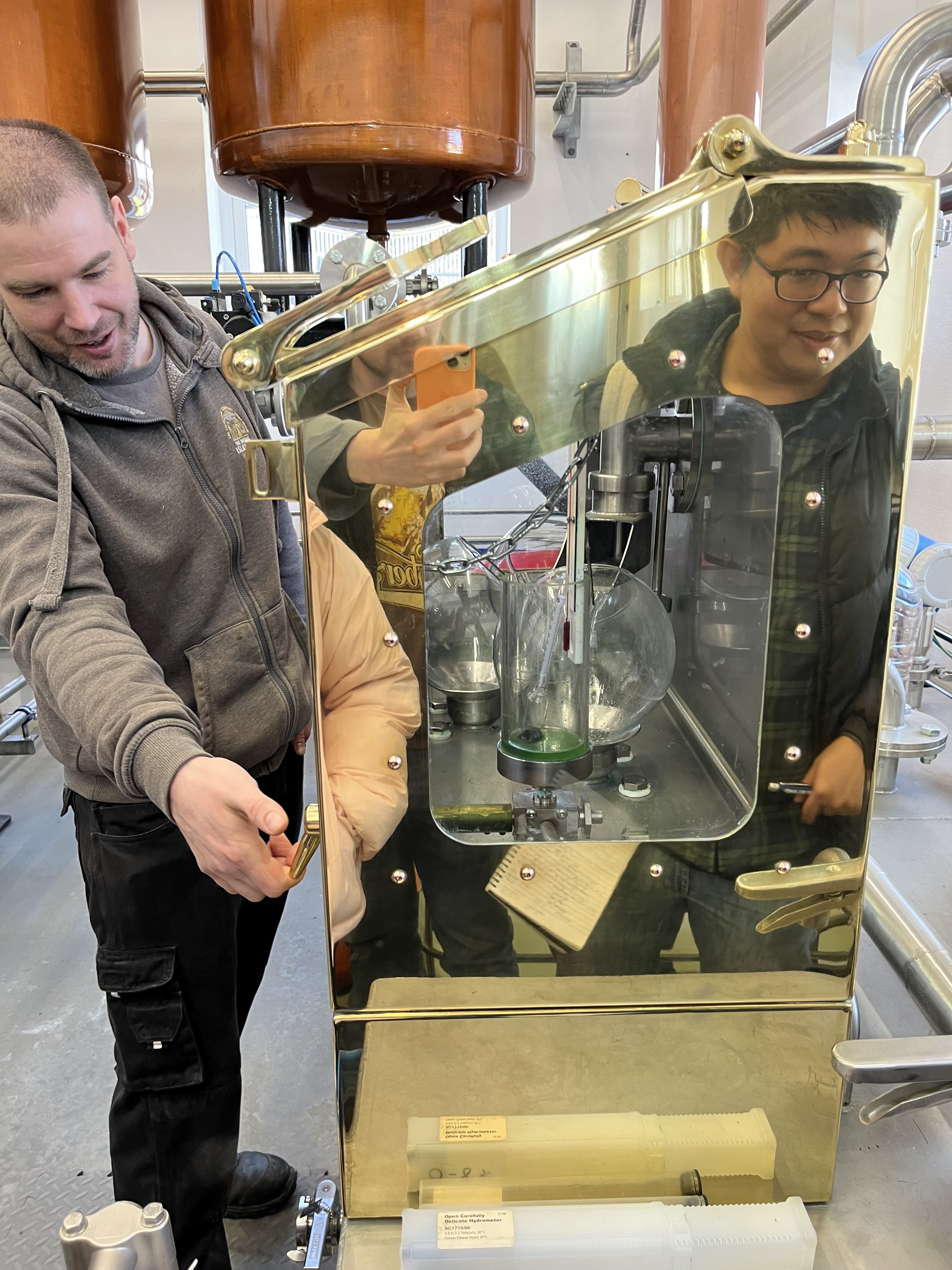
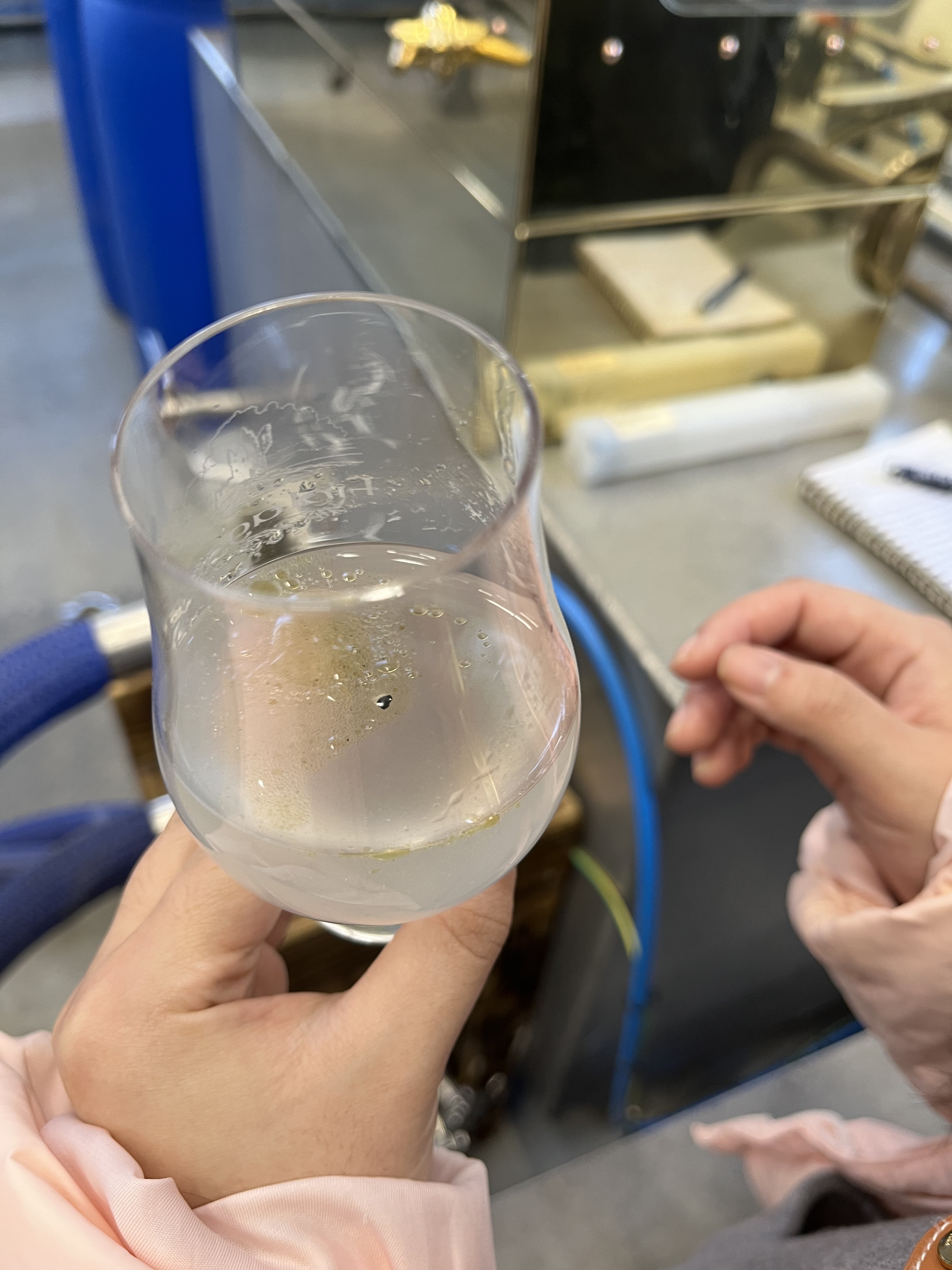
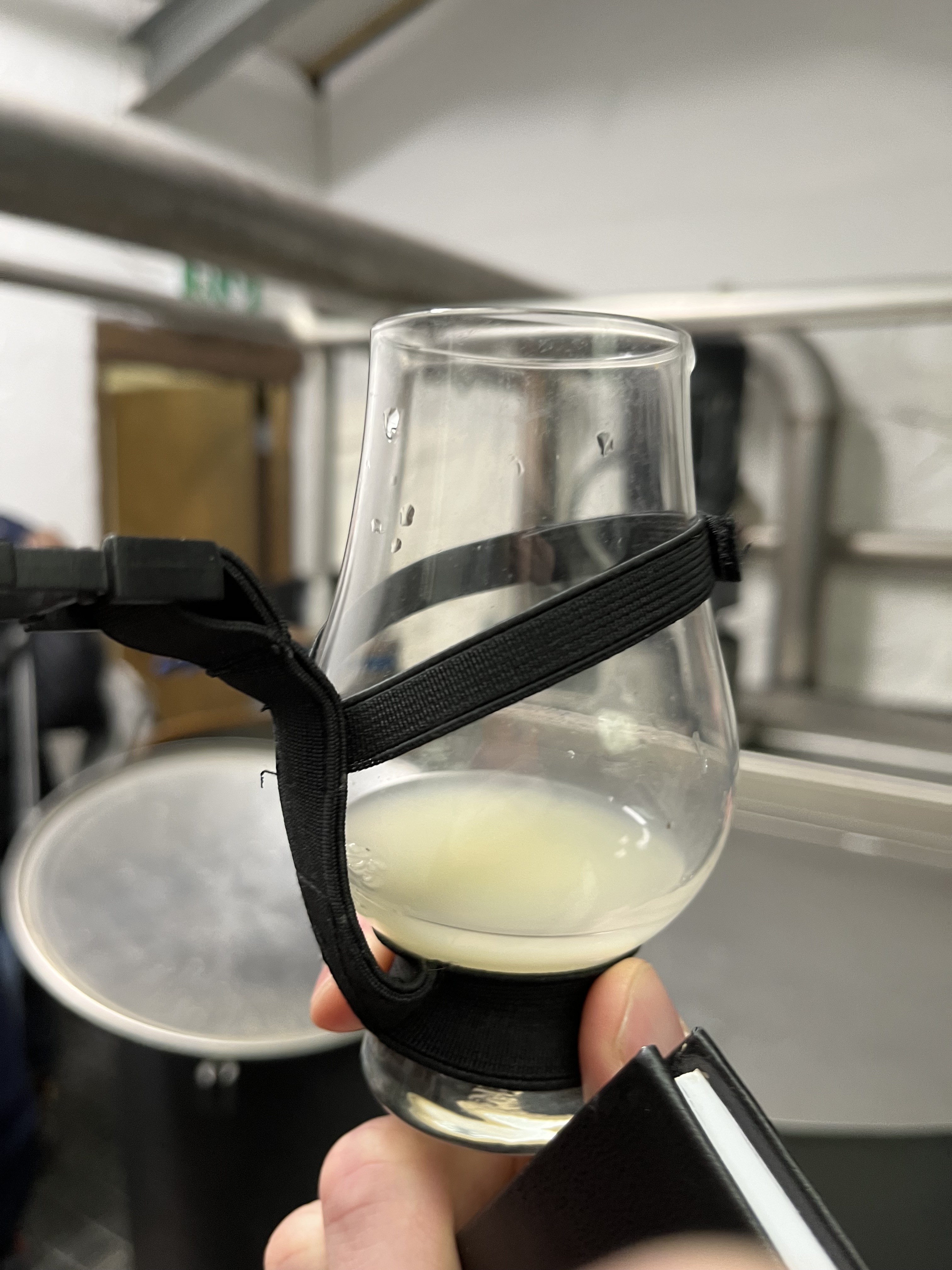
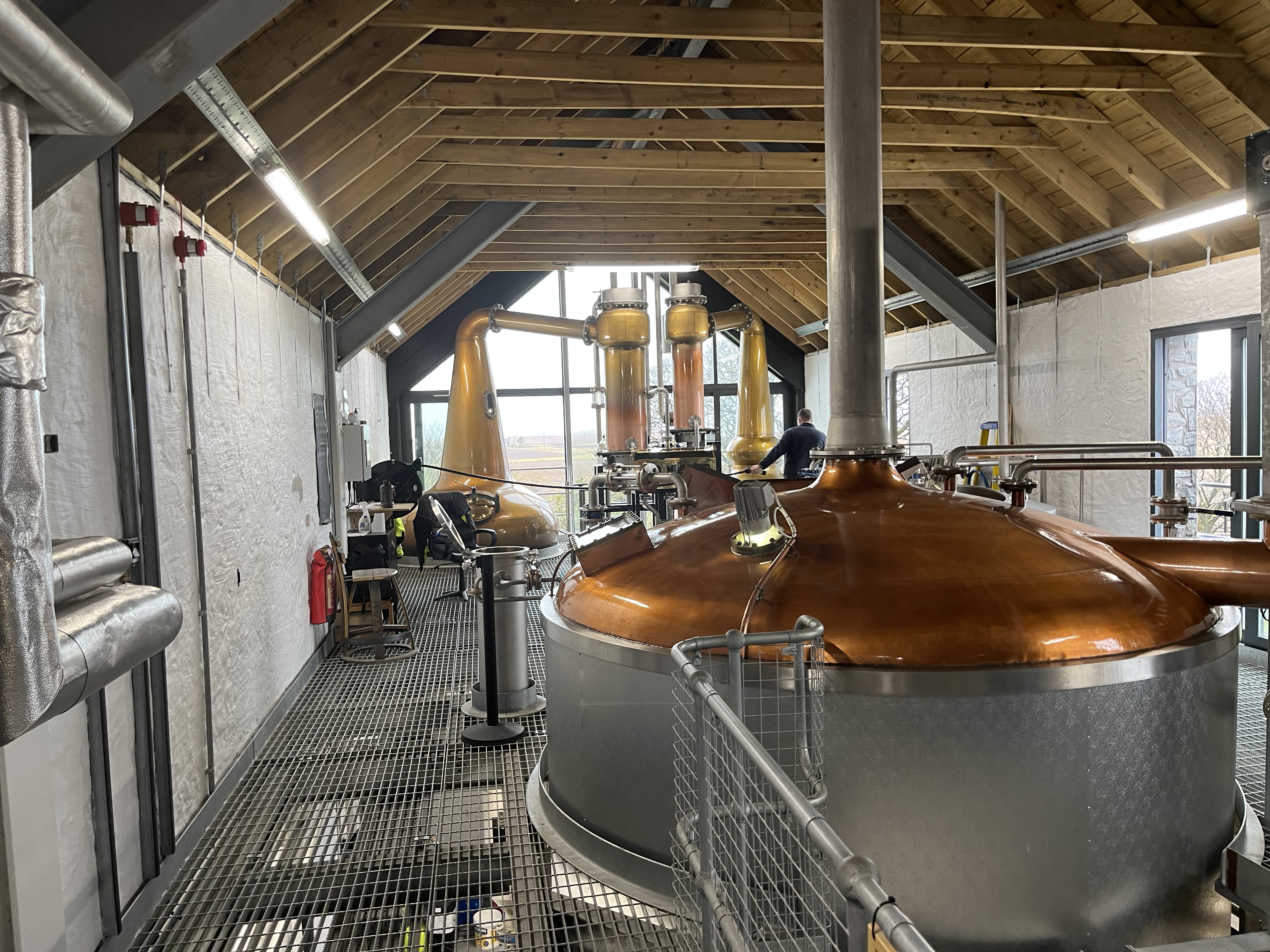
The still configuration is a bit different than you’d find in a whisky distillery, and of a design due to some 19th century bloke, Adams. A copper pot still for the wash (same as for whisky) feeds into a first ‘retort’ still which feeds into a second. The first retort contains the low wines at around 25% ABV, the second the high wines around 50% ABV. The vapours of one stage bubble up through the next, depositing heavier compounds and water and vaporizing more alcohol, thereby upping the oomph through each step. The spirit coming out of the second retort gets fed through the spirit safe, where it can be measured and monitored. The spirits comes through at a very high ABV that drops over time: the ‘foreshots’, up to 90% ABV, are fed back into the high wines; the ‘heart’ around 70-80% is the high-quality spirit taken out as new make rum. Of course we tried some: fragrant, earthy, meaty. And in the picture below is foreshots in a glass with oils forming at the top. In contrast to whisky, the foreshots contain no poisonous methanol, though.
We ended the tour with some white rum samples in cute ketchup paper cups (well, I whipped out my Glencairn) and, in a rush before we needed to be off the the next attraction, Ben also pulled some rum from an oloroso sherry cask for us to try.
Tasting and shopping spree at Lagavulin
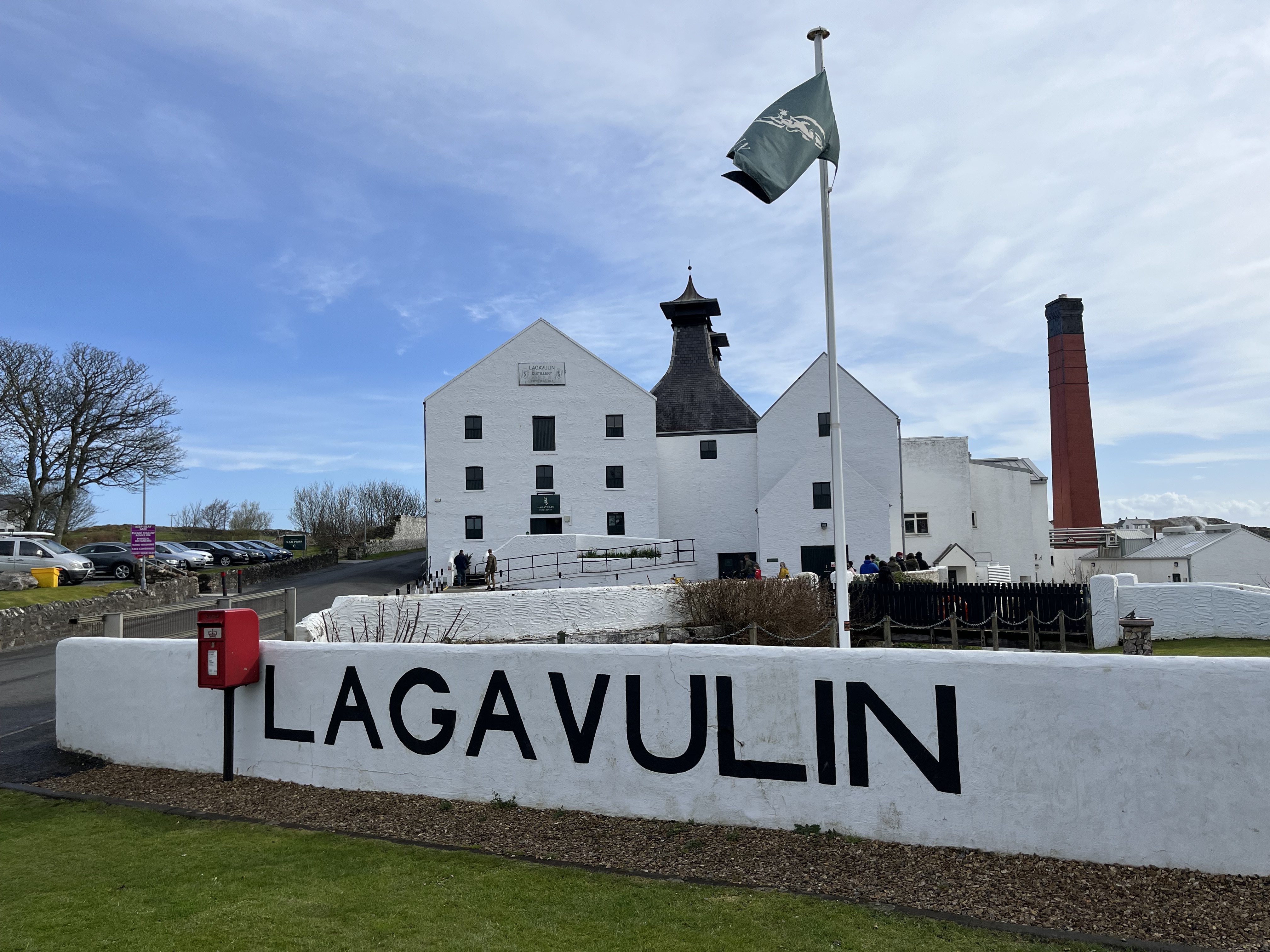
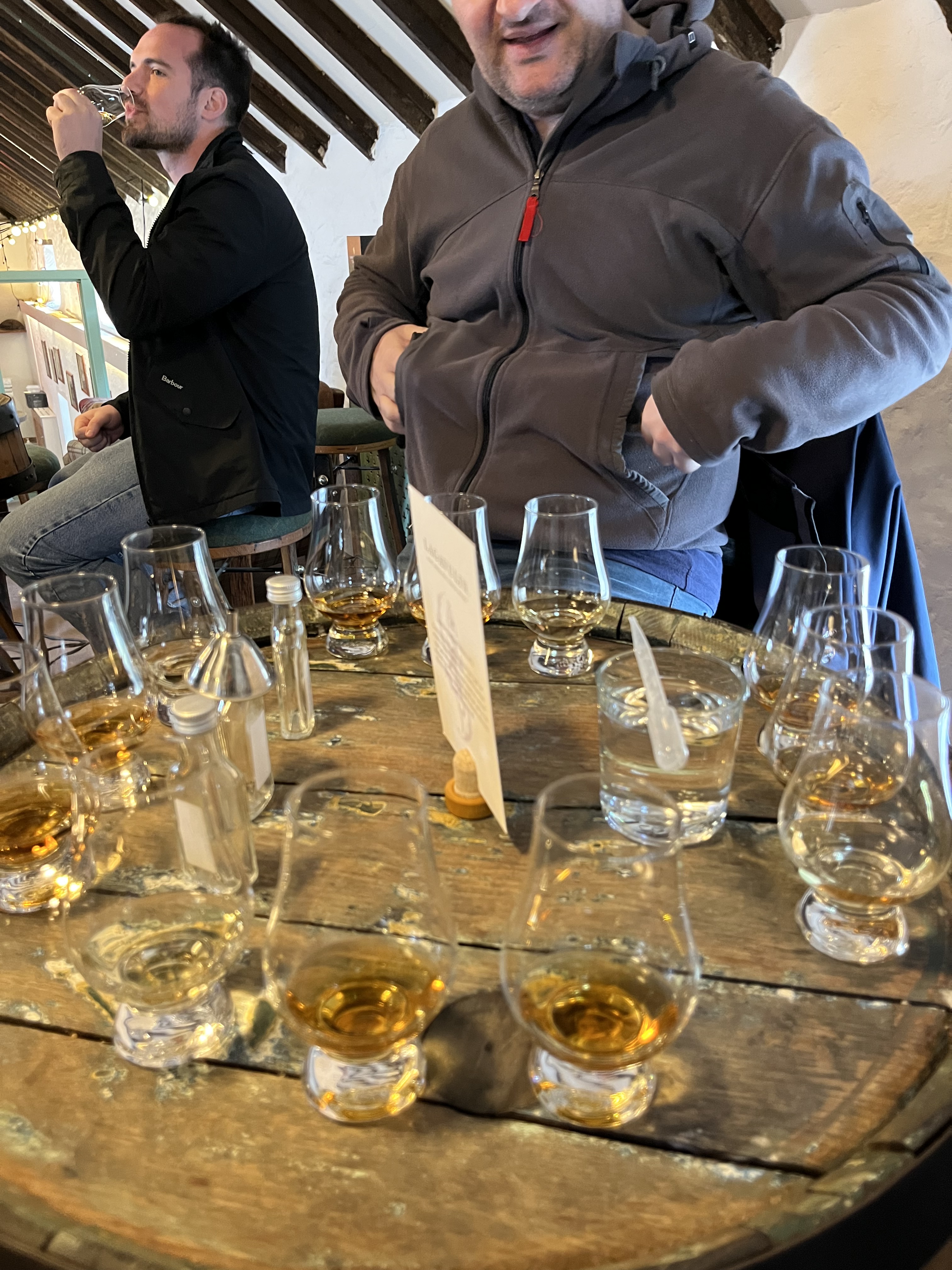
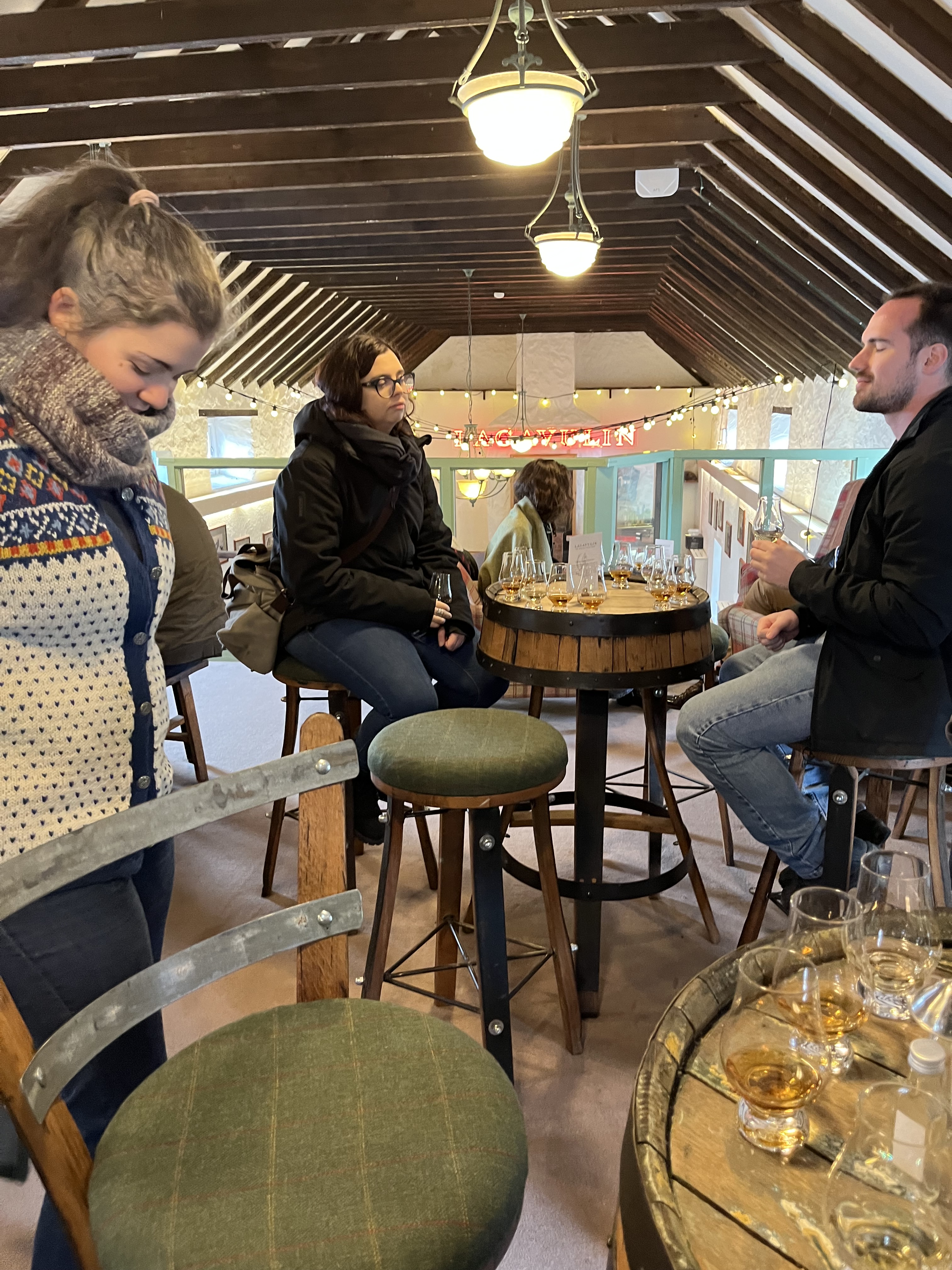
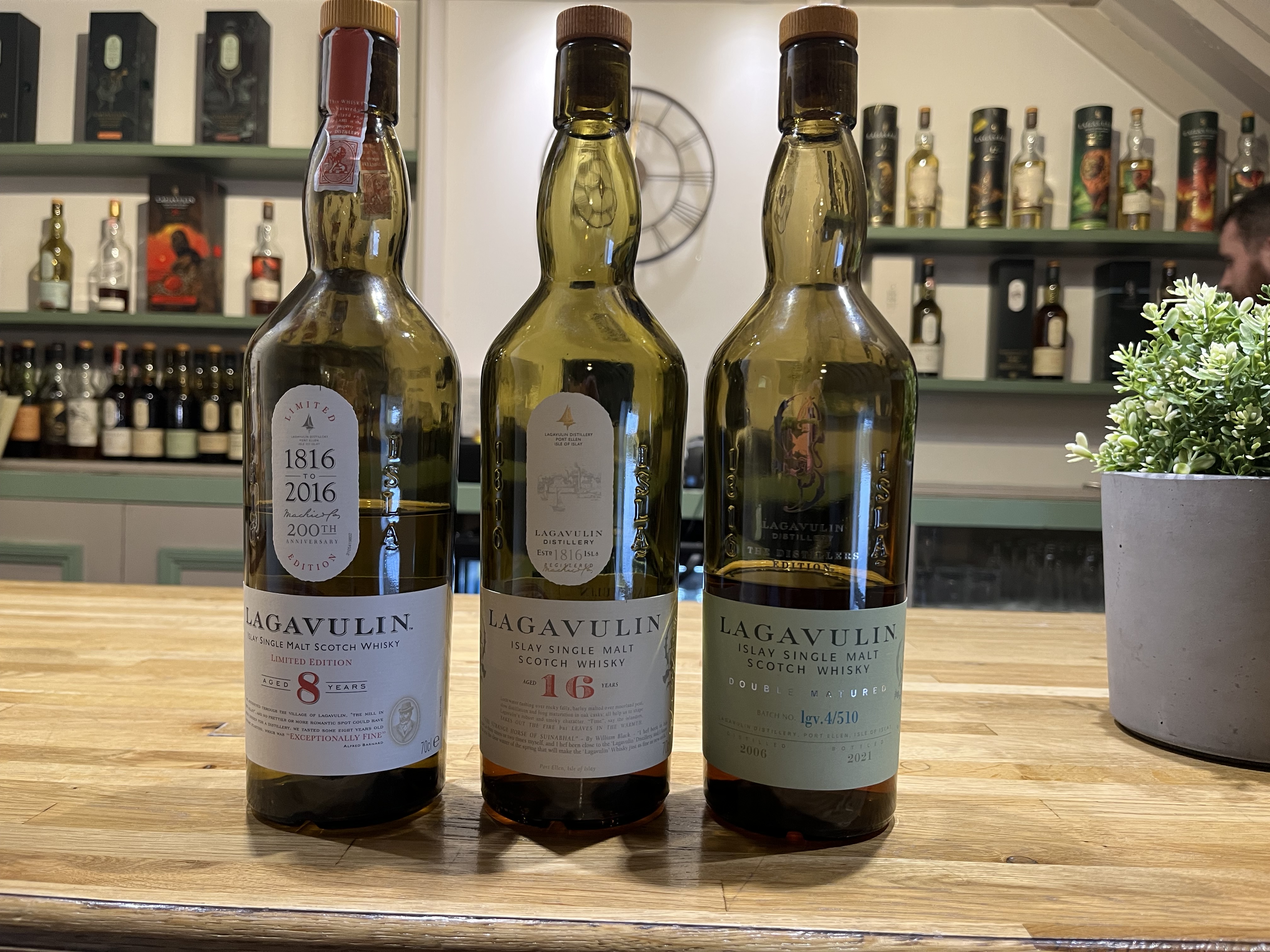
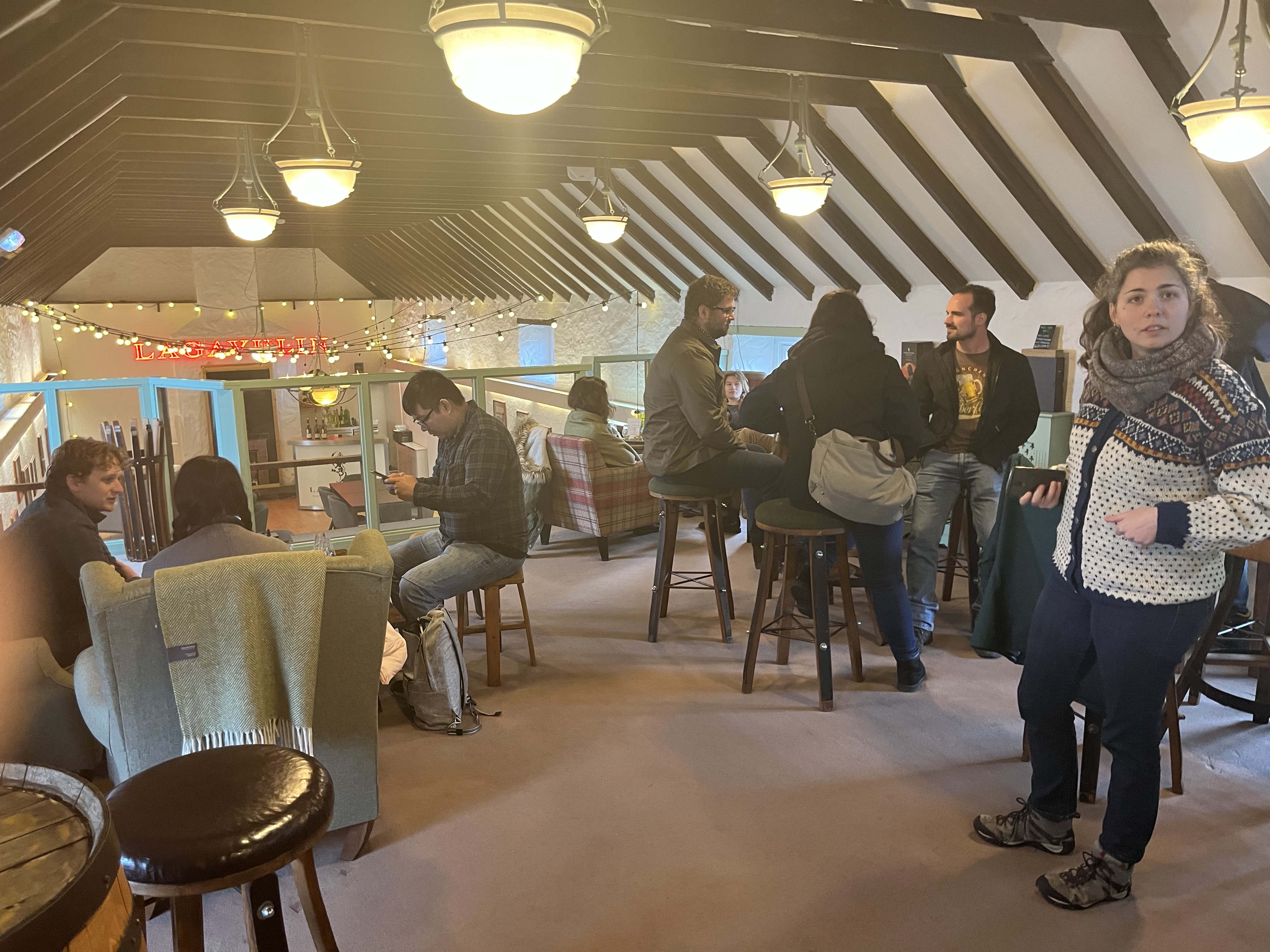
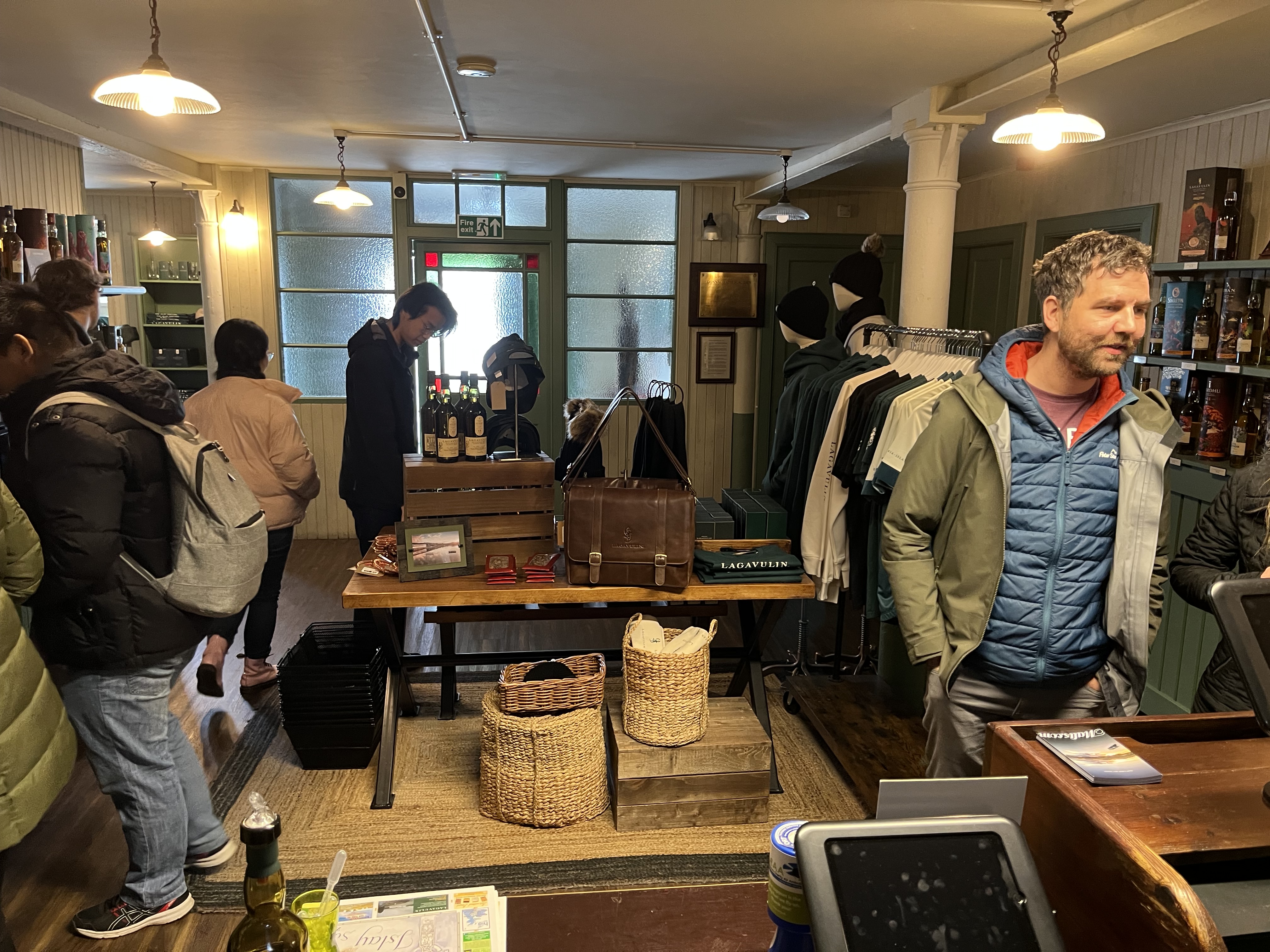
With rum in our bellies we continued on to Lagavulin, for a booked tasting (but no tour). The tasting room had a nice whisky-y atmosphere, and after a quick presentation of the three drams – the Lagavulin 8yo, 16yo, and 16yo distillers edition – we were left to our own paces.
Interestingly, in his presentation the visitor guide brought up the fact that the 16yos have added caramel colourant. I thought they would never openly draw attention to it. Allegedly it’s a vestige of practices in place when these expressions were launched (80s?) and now it’s too late to alter the appearance of such an established product. If this explanation holds water (or whisky) I would expect Laga to have natural colour in all newer product lines – do they?
Caramel colourant or not, I did thoroughly enjoy the whiskies. To me, Lagavulin has a much earthier peat profile, and is less coastal and briney than, say, Caol Ila or Bruichladdich. The 16yo adds some sweetness and dried fruit over the 8yo, and the distillers edition even more richness and umami with the PX casks. I bought the Laga distillers edition at Clynelish distillery (also Diageo-owned) at the WOLS 2019 autumn trip. It was then sub-£90; now the price is £110…
Even with inflation making everyone miserable we had a good look in the shop. A fair few people were eyeing the distillery exclusive bottle (later in the trip we learnt that came after us had swept up the last bottles). I had gotten a wee sample for free (all you need to do is ask!), and concurred with another WOLSer’s assessments that it was the 16 on steroids (cask strength etc). However, I myself was drawn to some 2020 bottlings of 14yo Clynelish distillers edition. I bought a pair for £58.50 a pop including a 10% discount – quite a bargain! These prises must have not been adjusted in a few years.
Sandwich at overmarketed Ardbeg
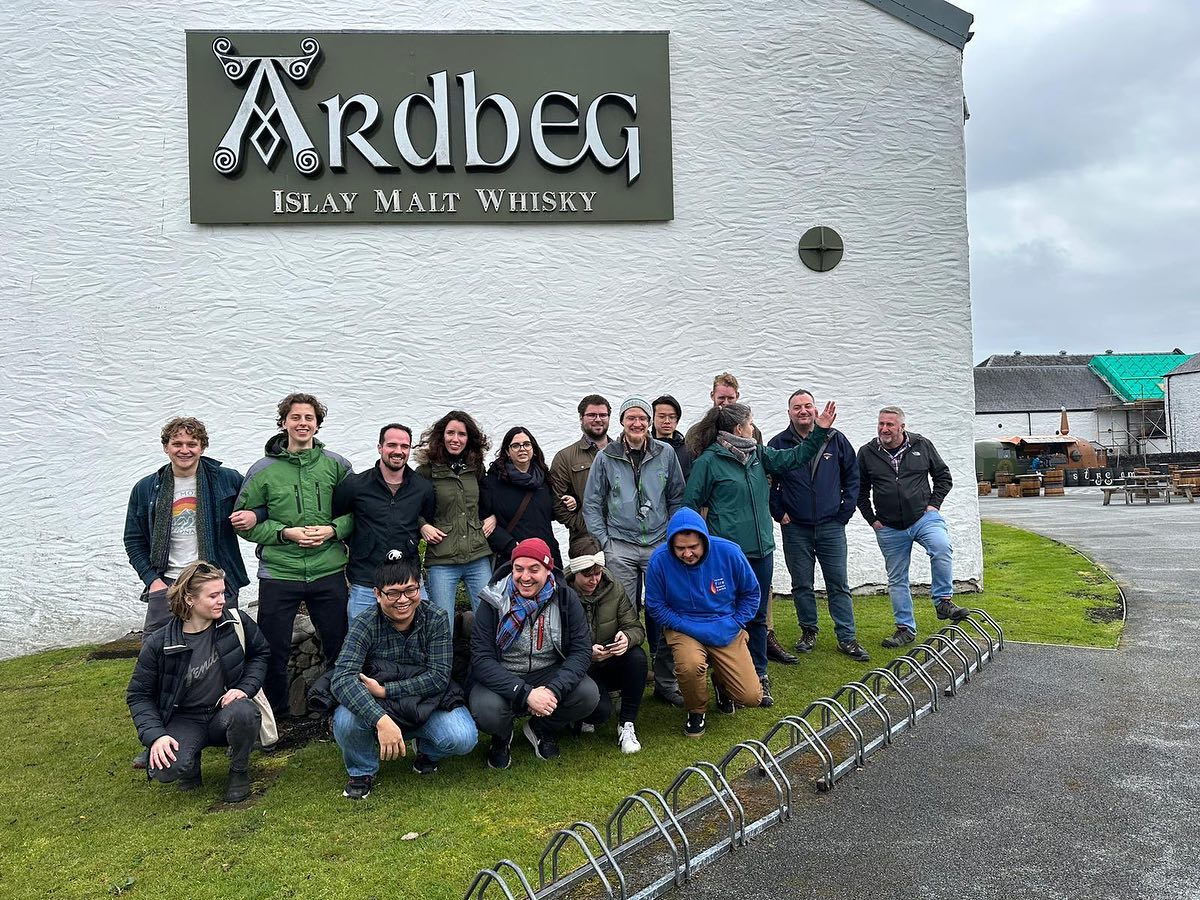
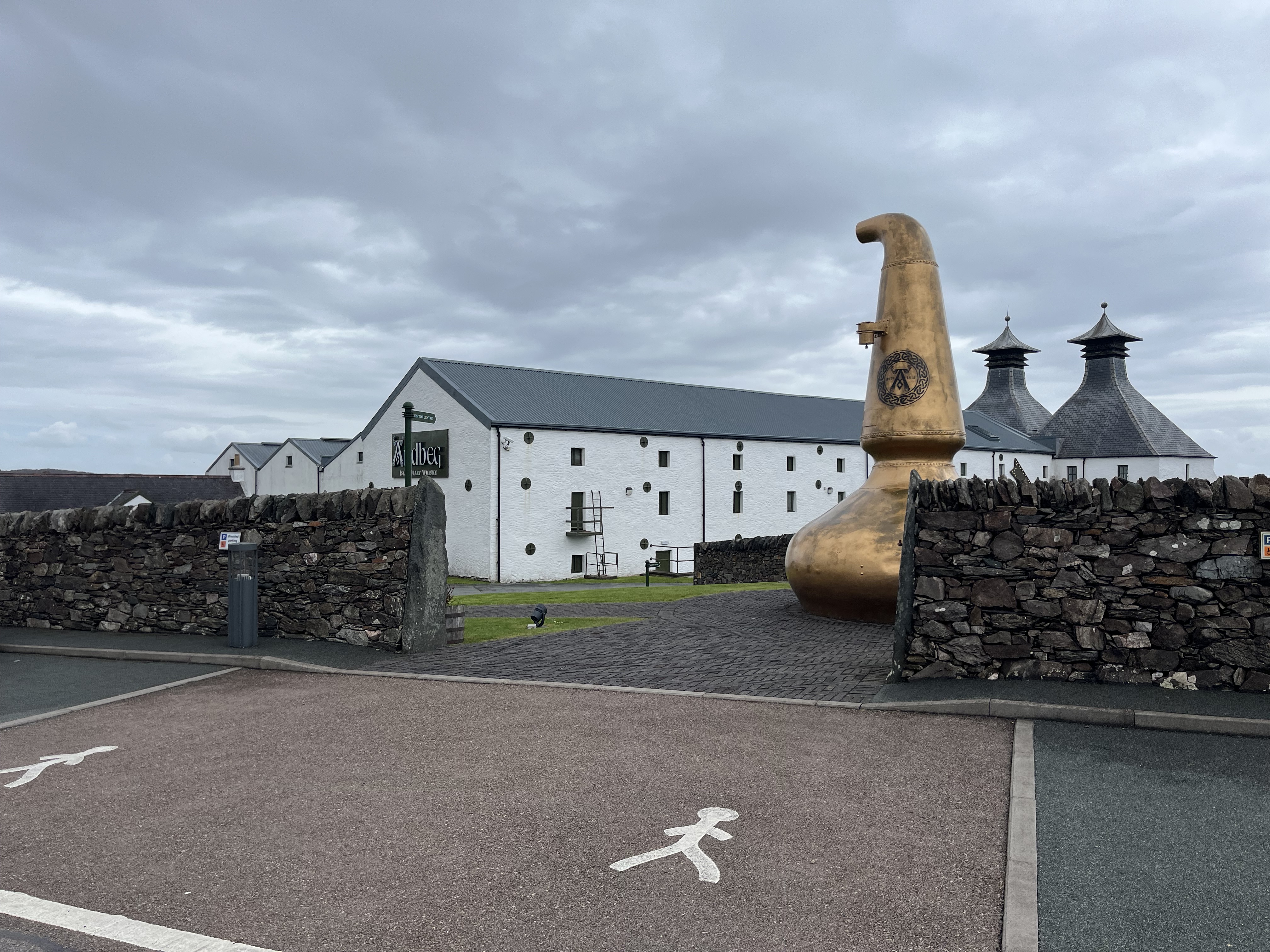
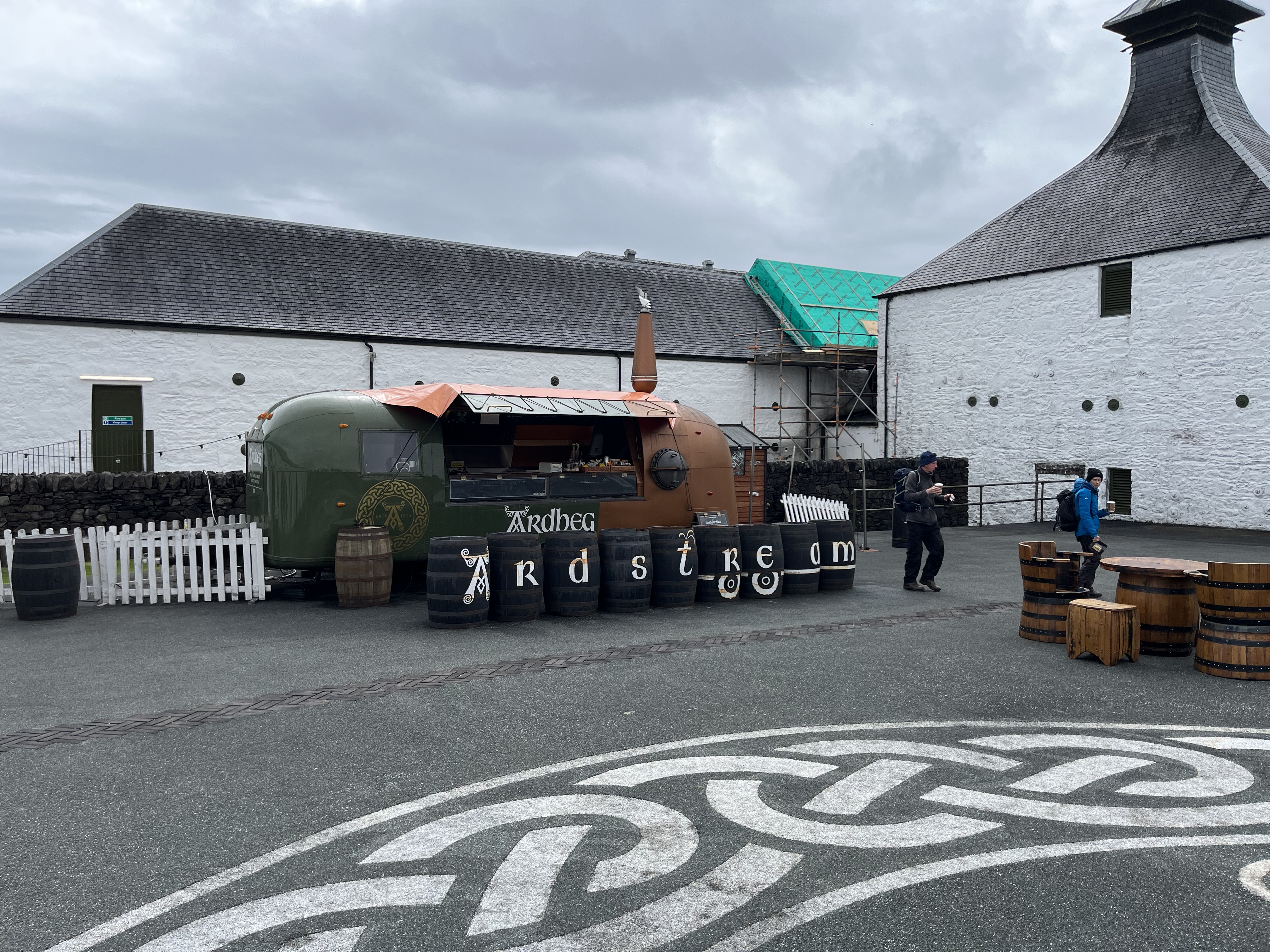
With rum and whisky in our bellies, lunch seemed like a good idea. Ardbeg has a restaurant, but (unsurprisingly) they could not fit all 18 of us, showing up unannounced on this busy day. Luckily, Ardbeg also has a food truck that was up and running in the patio, so we grabbed some some deli sandwiches, chowder, and scones. The committee bought a bottle of Ardbeg’s new release ‘BizarreBQ’ to warm us up with.
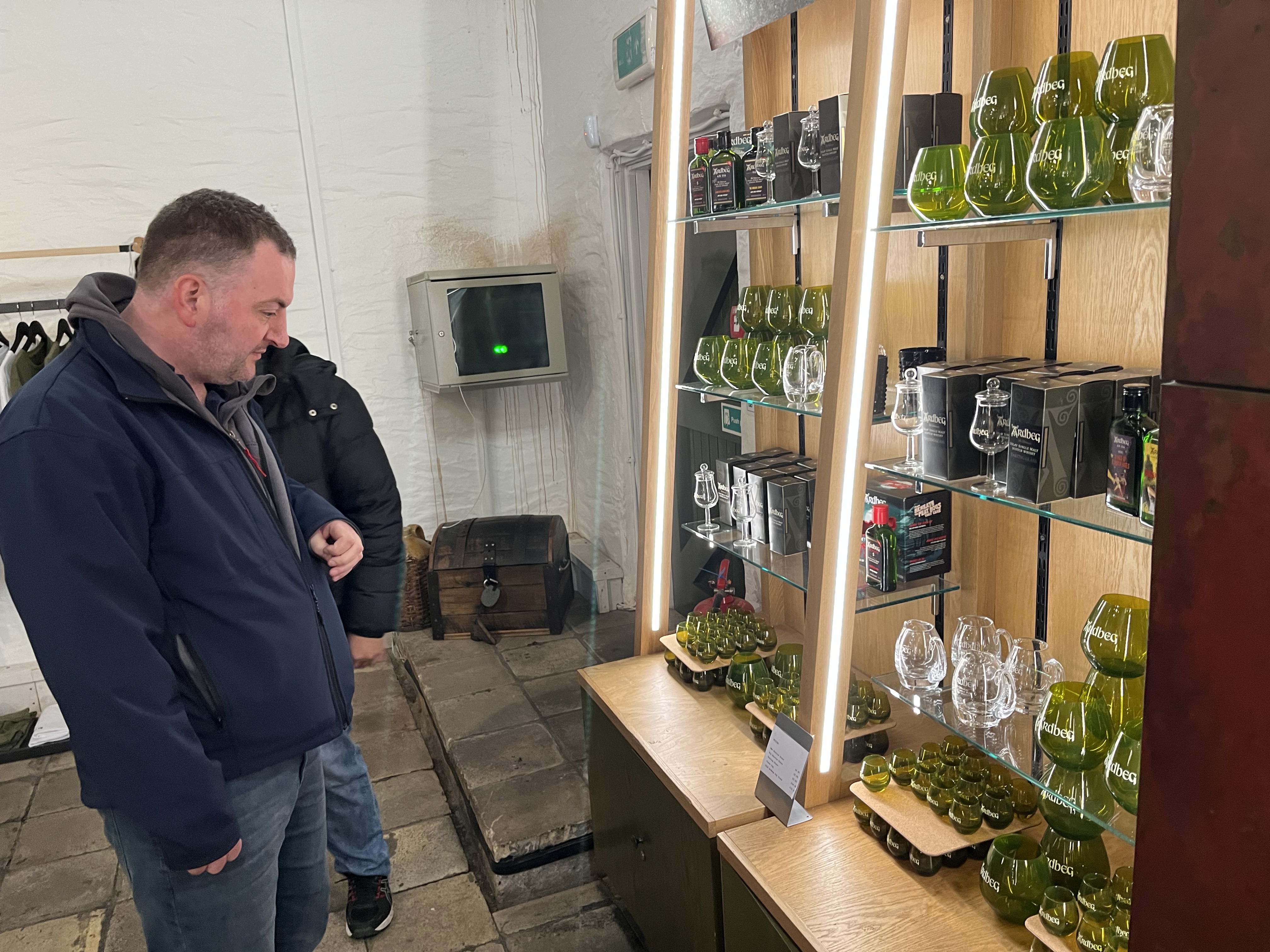
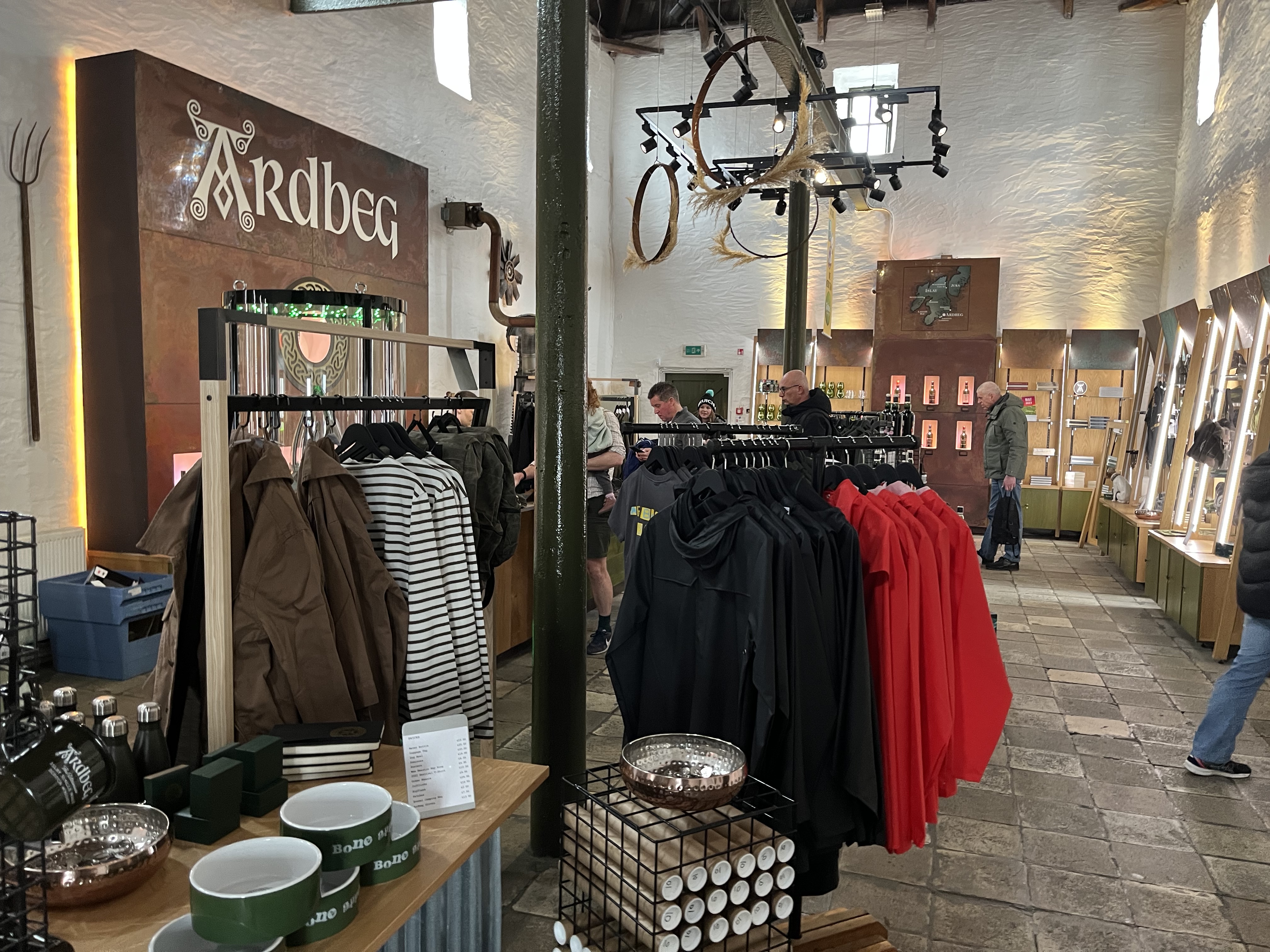
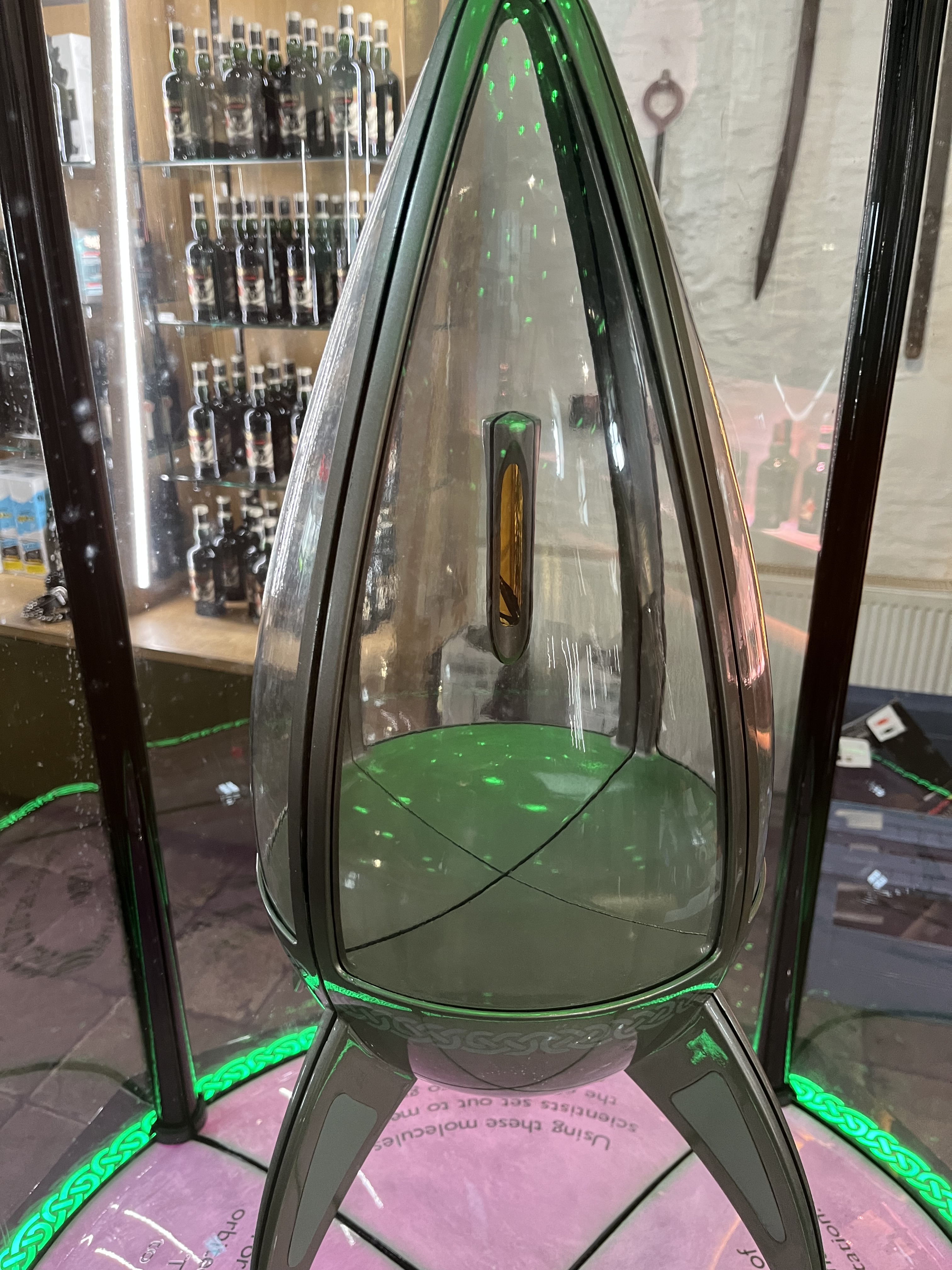
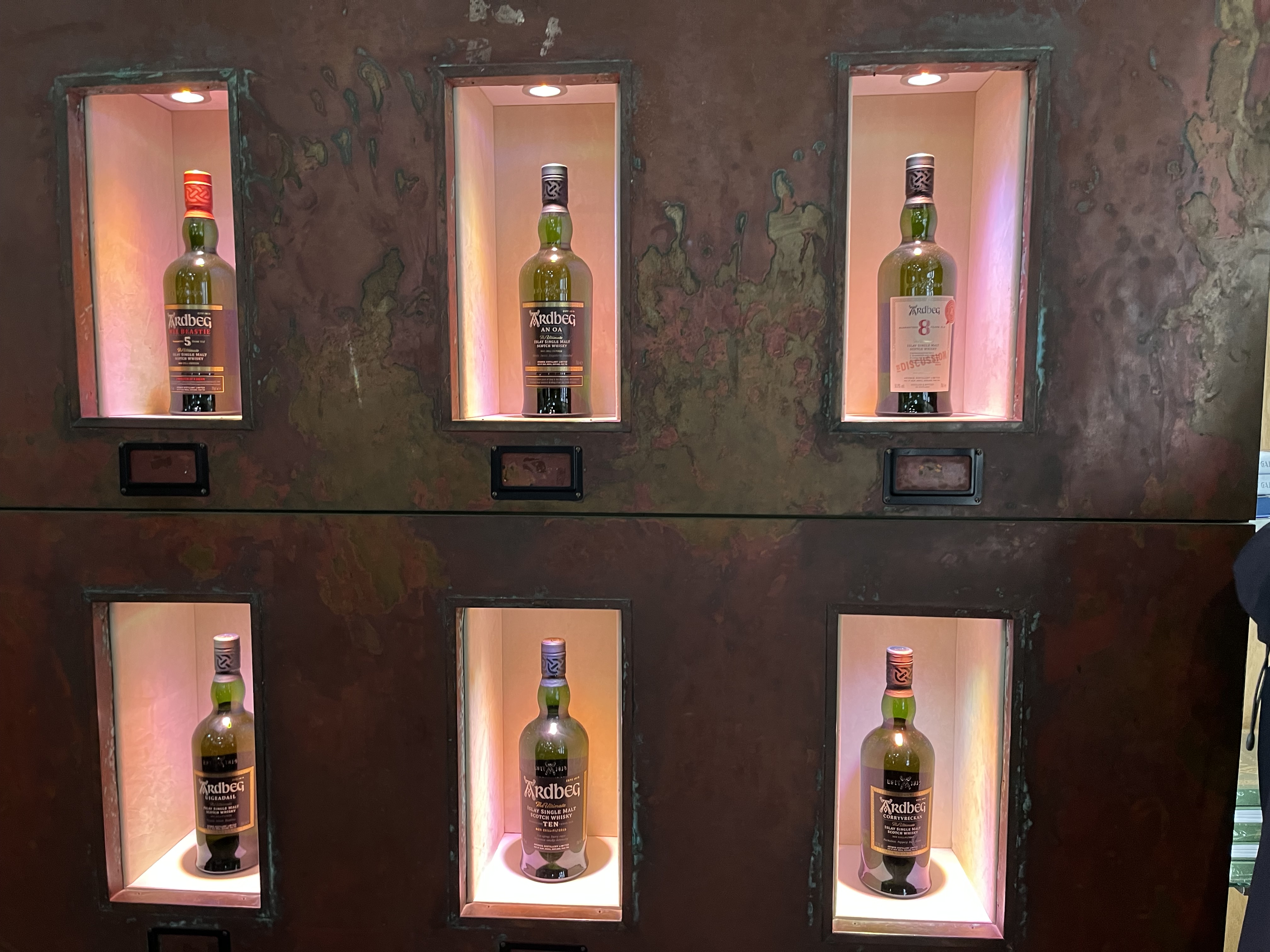
No tour or tasting booked, but as always we examined the shop, where some of Ardbeg’s marketing stunts, like a spirit sample ‘matured in space’ were also on display. Ardbeg has a devoted following, as much due to characterful branding, as to characterful whisky, I’d say. But recently they really seem to have gone down a spiral of excessive marketing, deteriorating quality, and inflated prices, which has not gone unnoticed.
Tour of Kilchoman and chat with founder Anthony Wills
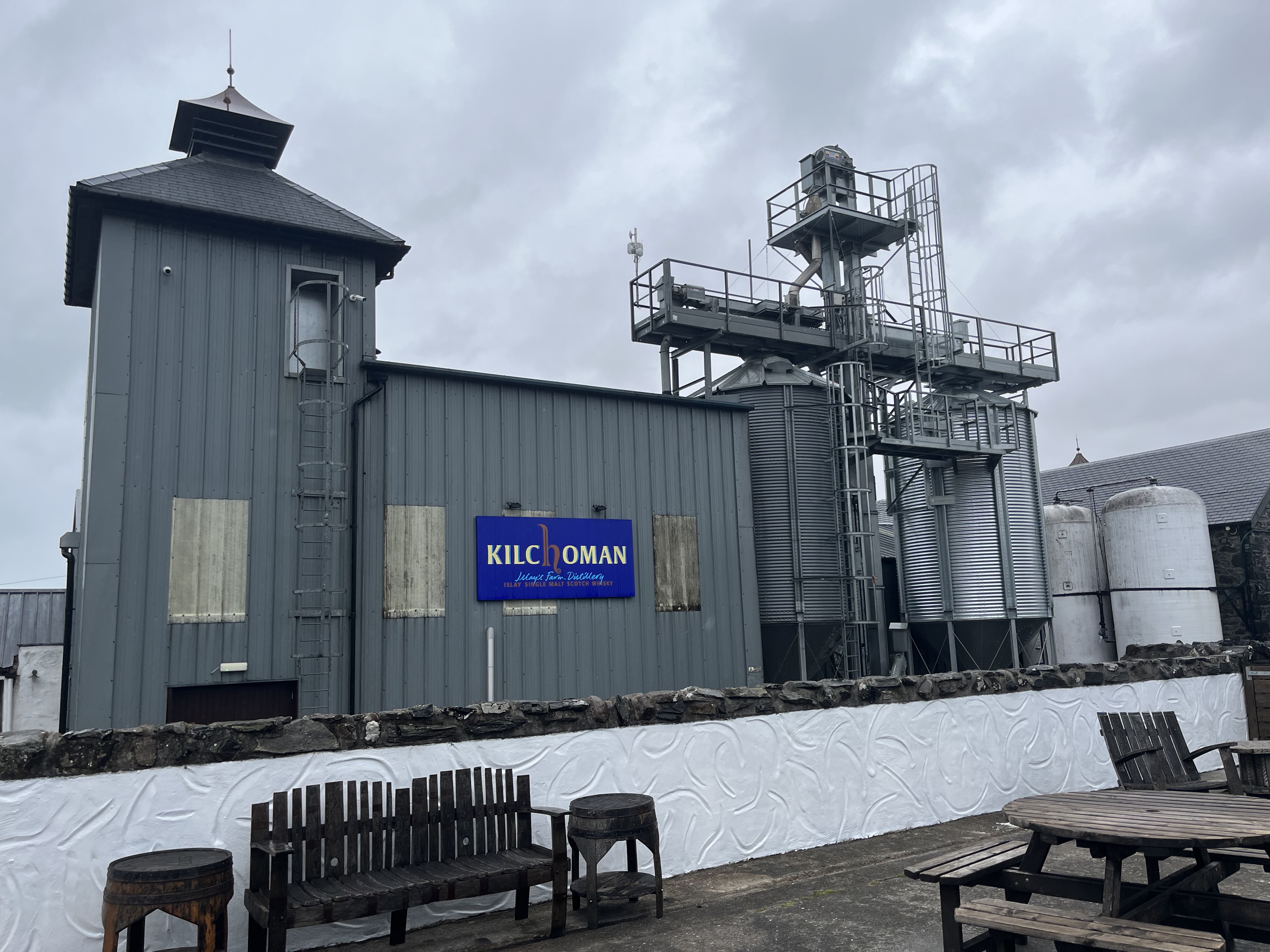
As our final attraction of the day we rolled up to Kilchoman. It was the first new distillery to be erected on Islay in 124 years when it opened in 2005. But Kilchoman isn’t Islay’s littlest babe no more – Ardnahoe distillery (scheduled for the next day) opened in 2018, Port Ellen is set to reopen this year, Portintruan is under construction, and plans for two more Islay distilleries are in the works. We are living through a veritable whisky boom!
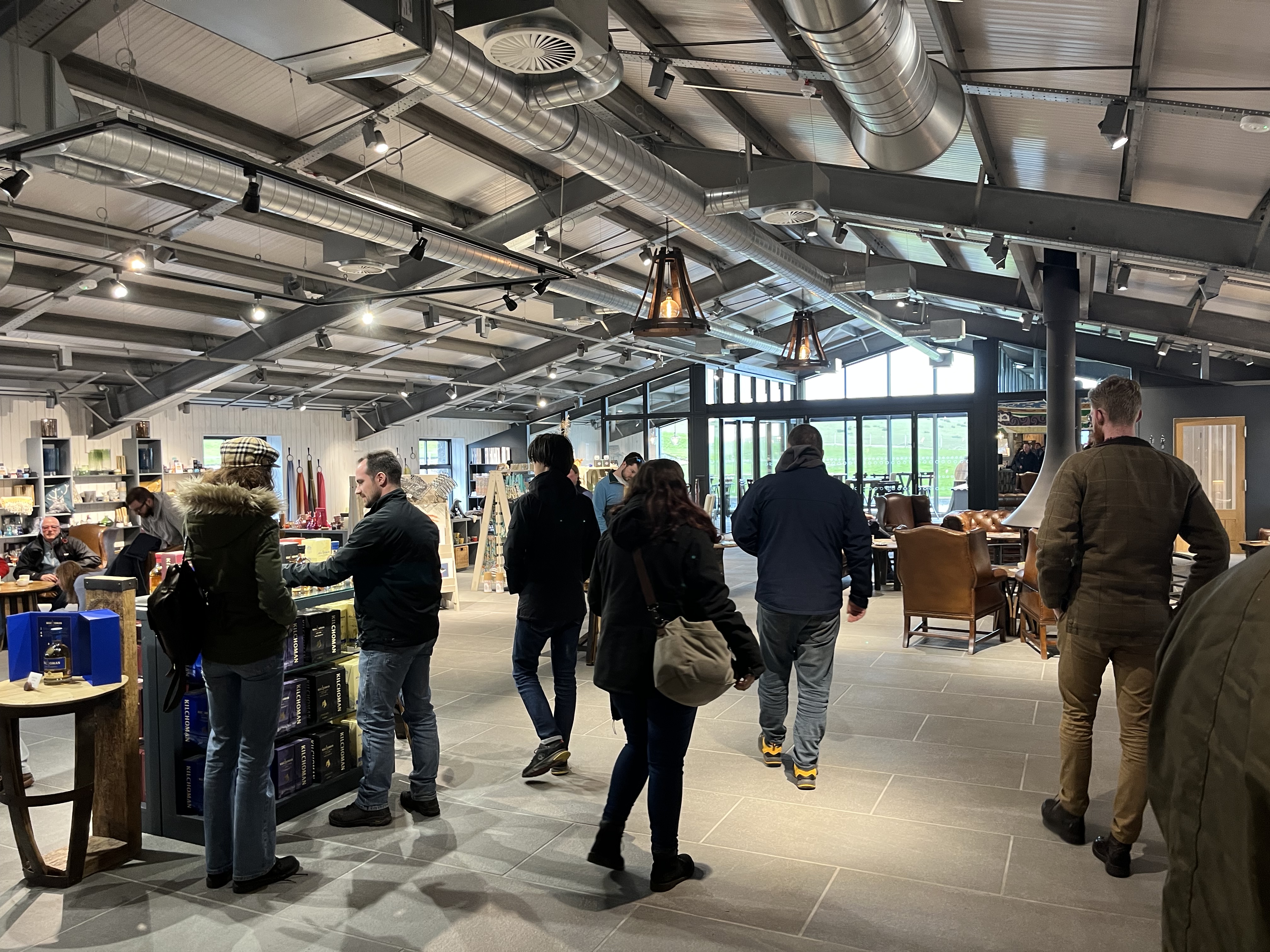
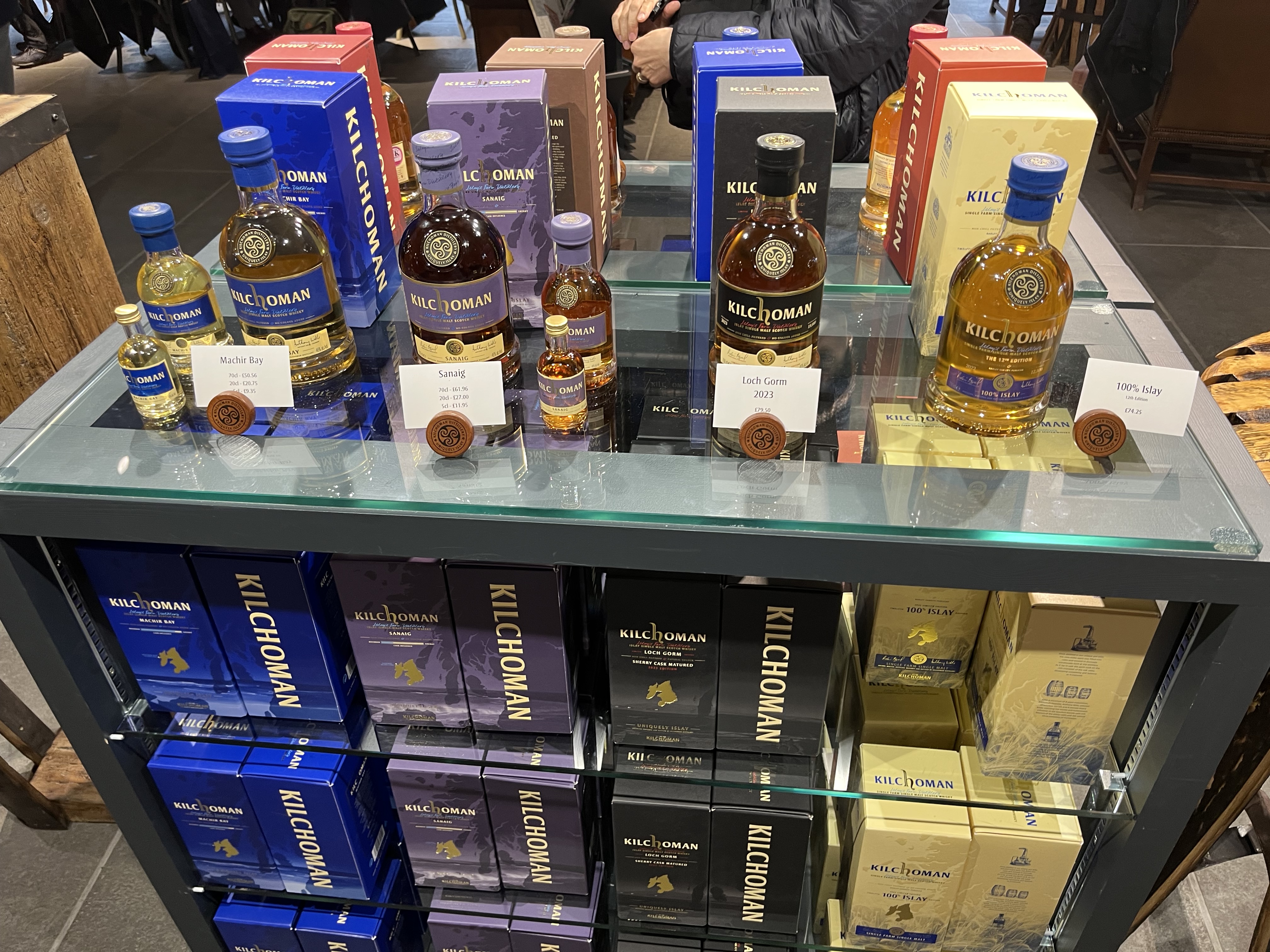
Kilchoman themselves have been expanding in recent years, both with a new still house and a spacious new visitor centre. Entering the latter, we found a whisky bar, a tasting room, and a liiiiitle stand of Kilchoman whiskies among the other product shelves. I sent some pictures to Mikael, father my dear friend Filip in Sweden, who is probably our country’s biggest Kilchoman fan and collector.
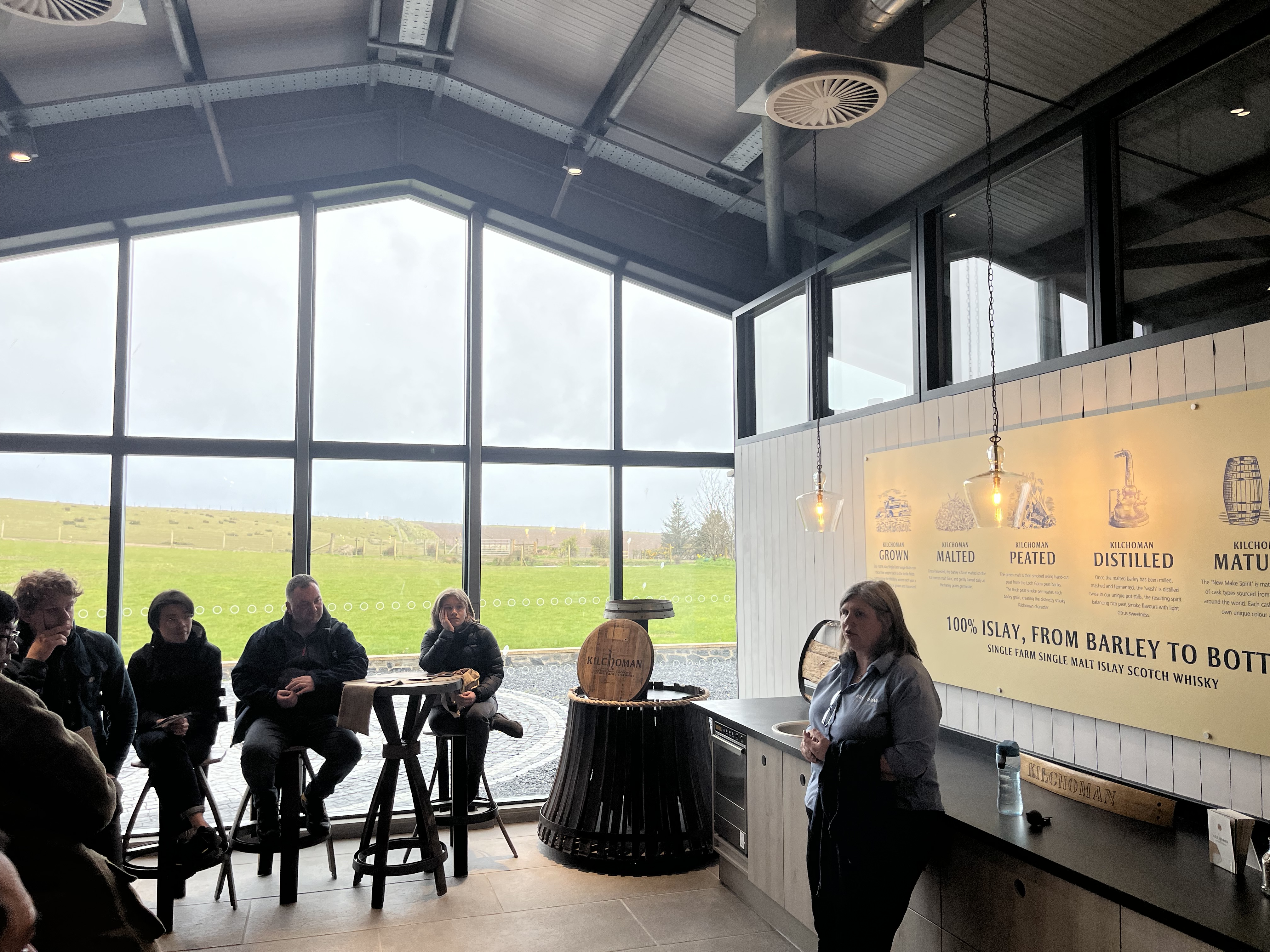
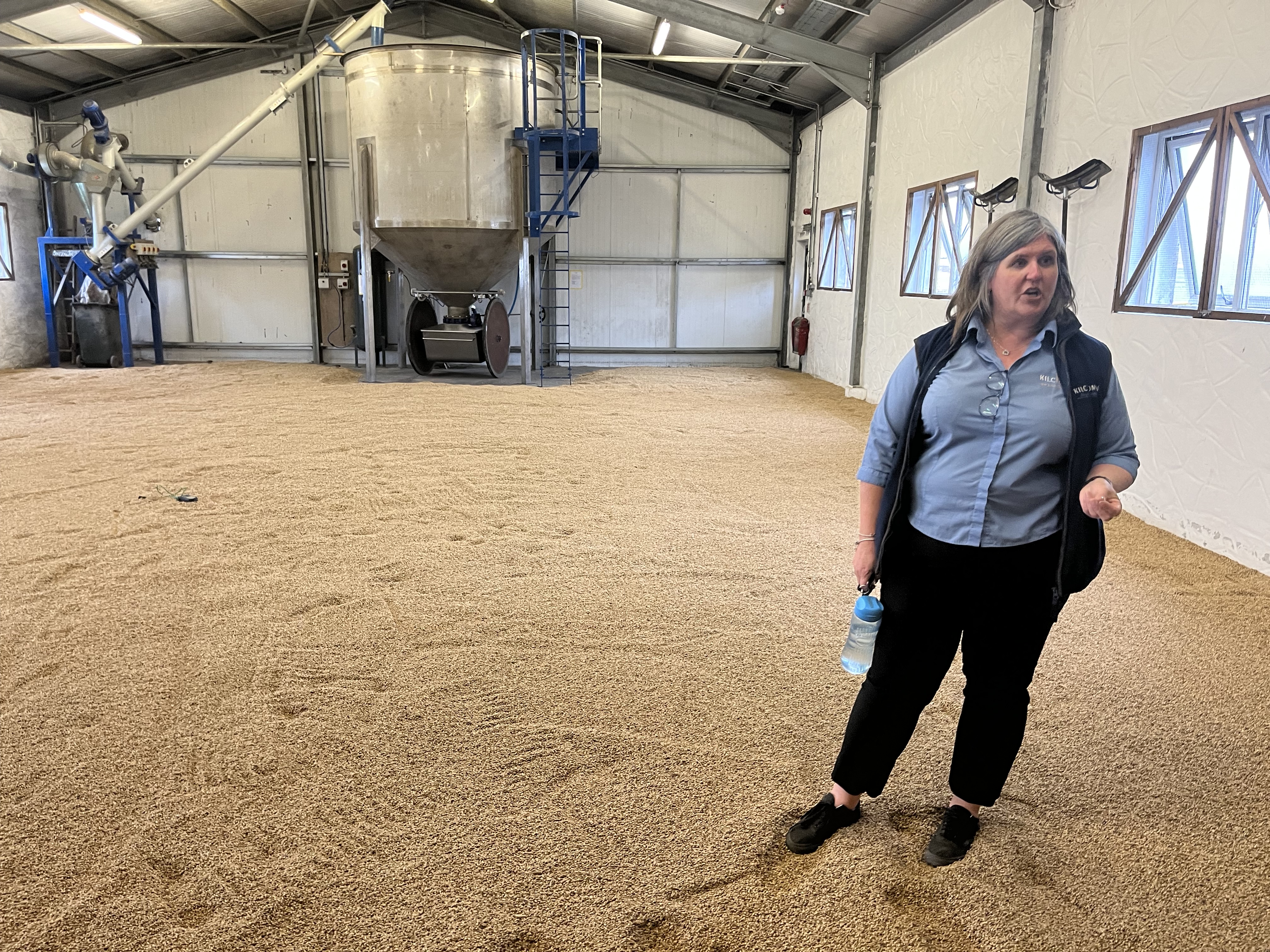
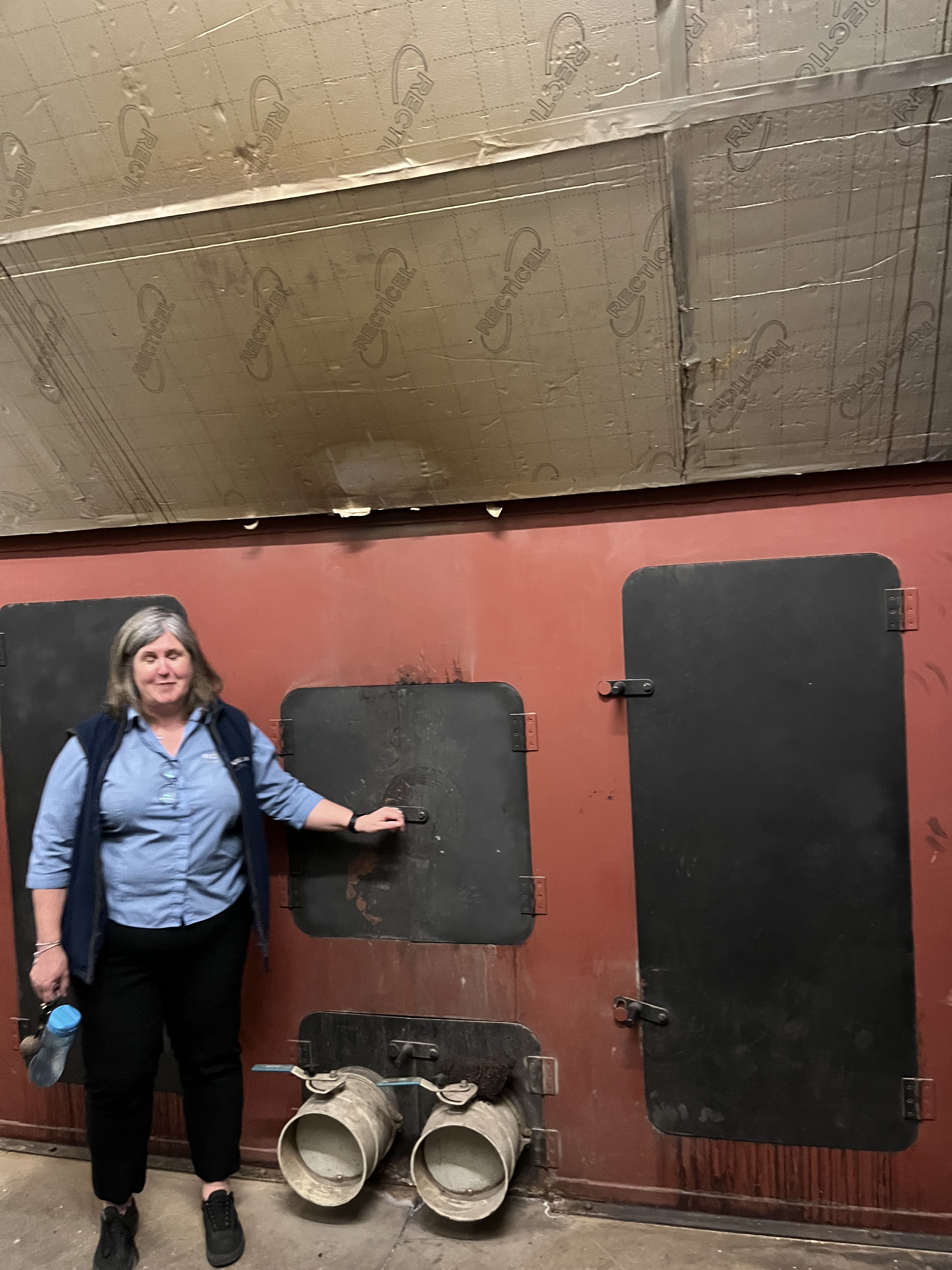
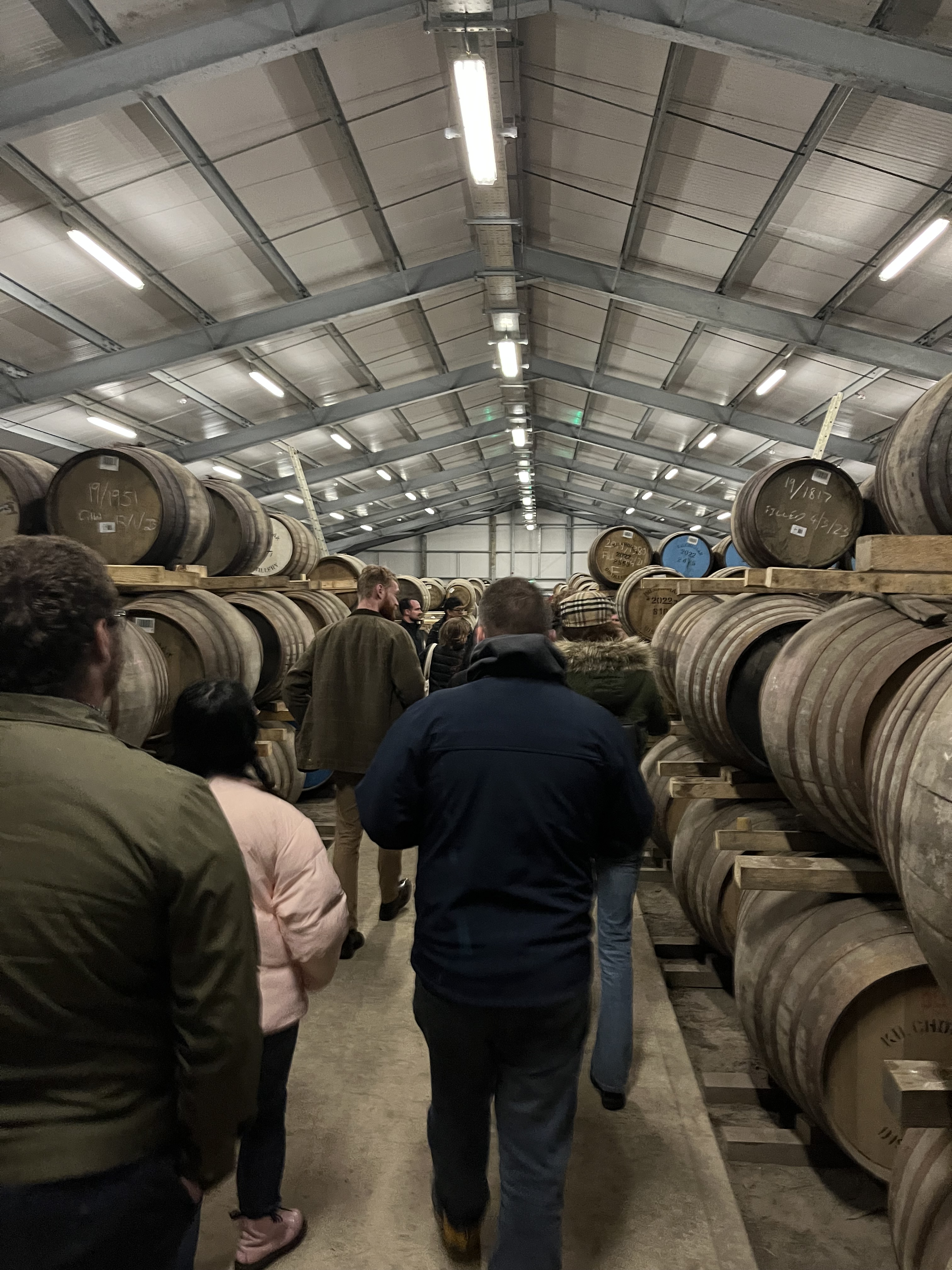
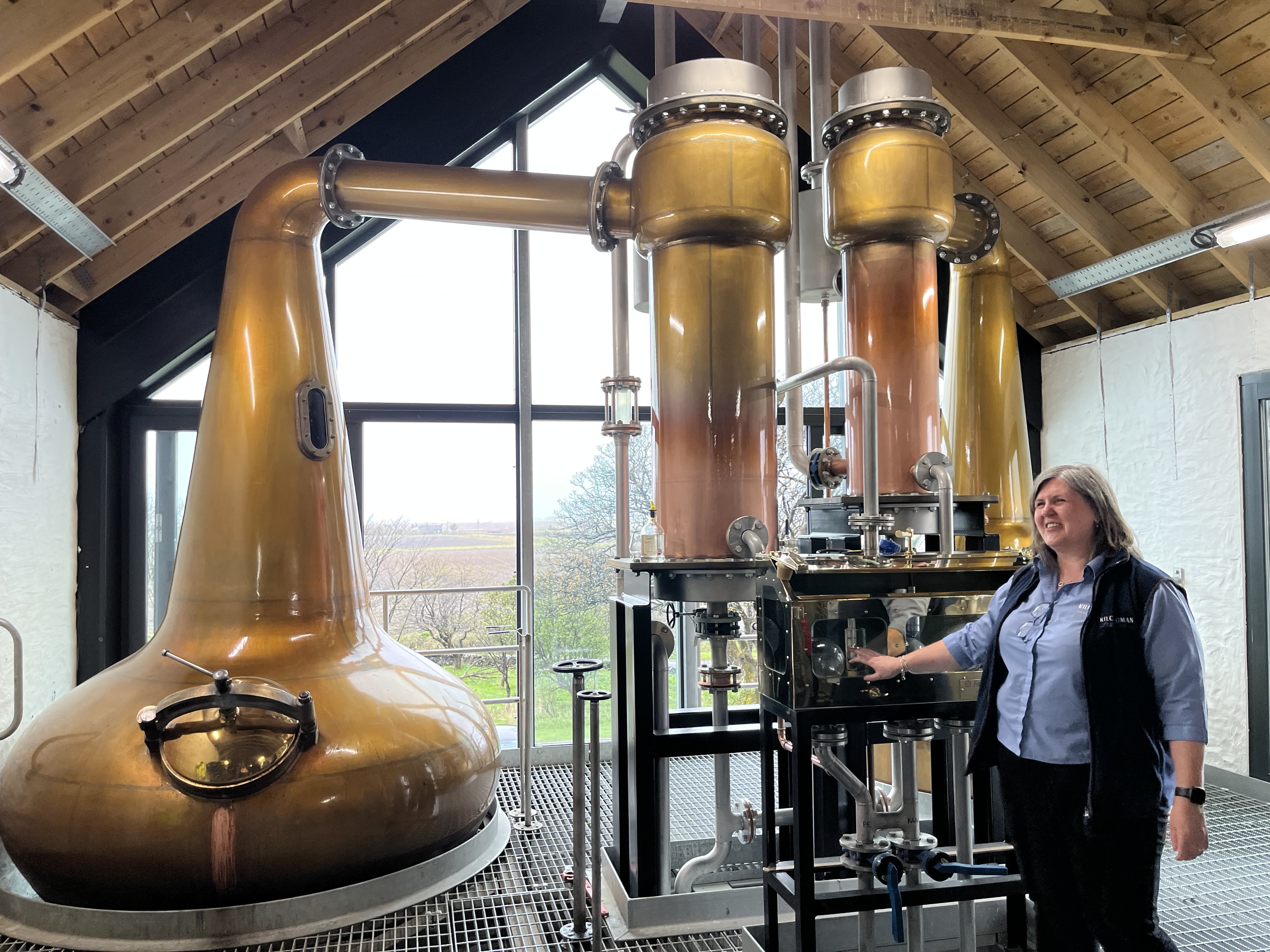
We received a rather complete and engaging tour: of the floor maltings, peat-fired kiln, washbacks, still room, and dunnage warehouse. The floor malting and kiln were certainly the most interesting and unusual parts of the tour since most distilleries buy their malt from a commercial malting, so I’ll focus on that:
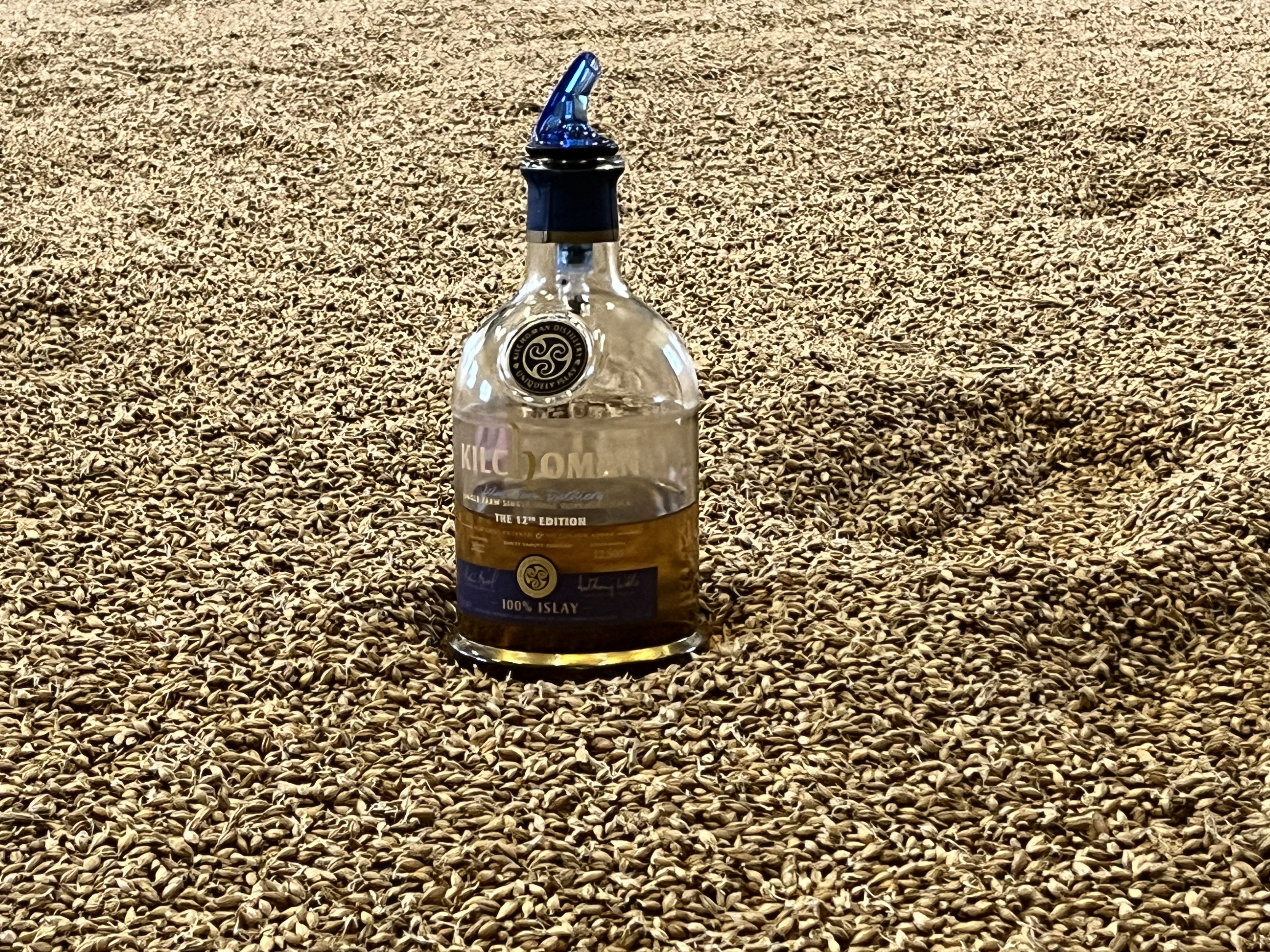
As part of the Kilchoman’s 100% Islay concept, they partnered with – and eventually overtook – a local farm to grow barley for them. Now, Islay is not the optimal location for barley. The weather is too wet and changeable. Also, the sowing must be timed to avoid migratory birds eating the crops. Nonetheless, they have been experimenting with growing different varieties of barley to get decent results. Most Kilchoman whisky does not use the home grown barley, though.
To make malt out of barley, it is first steeped in water and then spread out on a malting floor to begin the germination process. Workers turn the barley over by shovel at regular times, working shifts throughout the night. There is no temperature control in the building apart from opening closing the doors, so the temperature of the barley is maintained at the right level by either spreading it out or piling it up. I ate a few grains of barley, but realized I shouldn’t have when I saw people walking with shoes on it, not to mention the birds (no shoes on the birds, though).
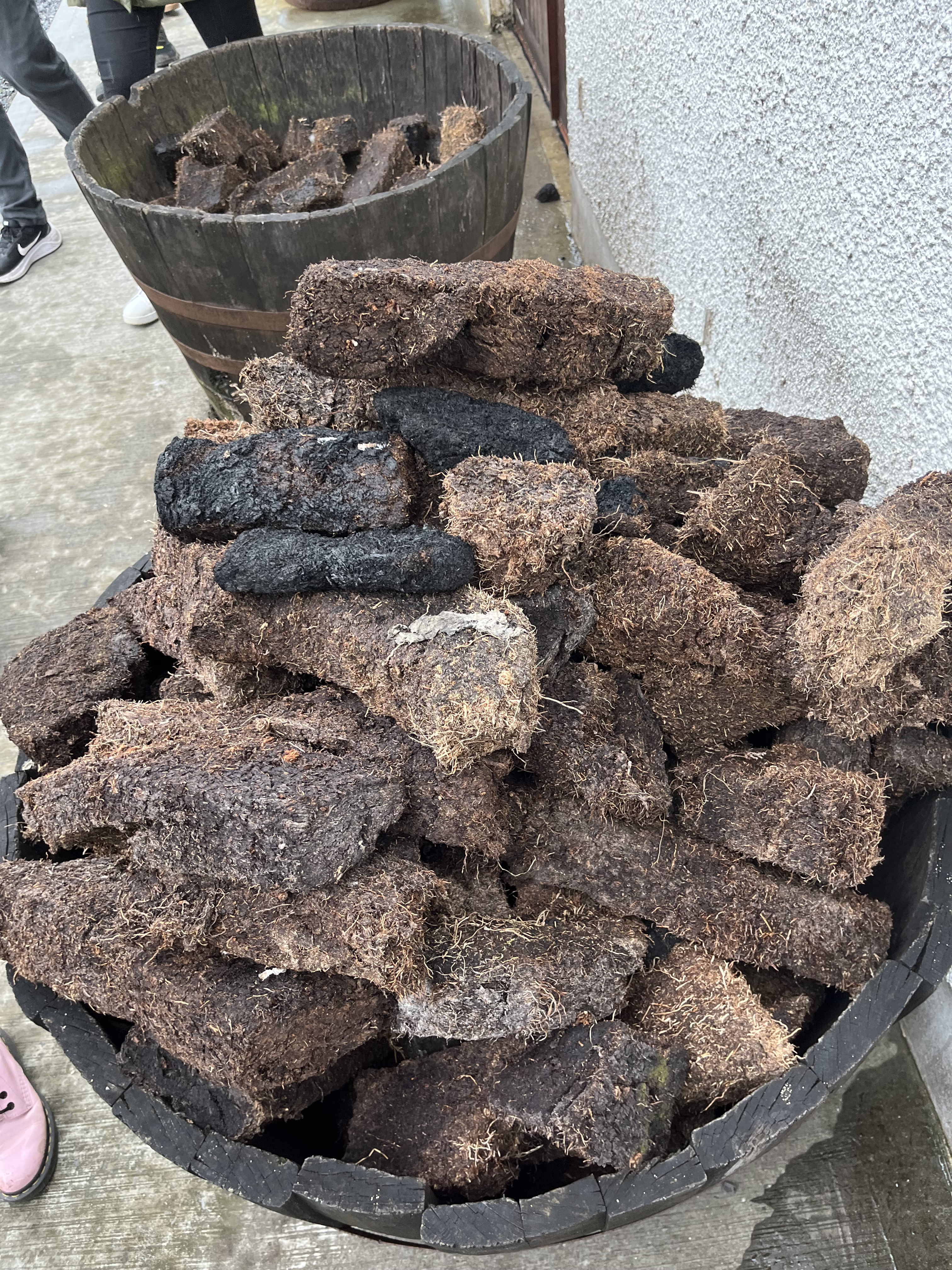
The second step is to halt the germination by drying the barley out in a big kiln, thus ending up with malt. Traditionally, these kilns were fired with peat, and still are in the production of peated malt that makes peaty whisky. The tour guide’s favourite topic to talk about was peat, and naturally we indulged her. Apparently peat, which is essentially fossilized plant matter, is becoming a sensitive issue due to the erosion of peat banks, the finite amount of it, and the green house gasses released in its bruning. Some number of decades from now alternatives may have to be sought. For now, Kilchoman has the right to carve peat from a given plot of Islay land. Apparently they have a guy who does it all every season and he has the superpower of not minding the midges. (I mind midges. A lot.) I snuck a bit of Islay peat into my pocket as a souvenir.
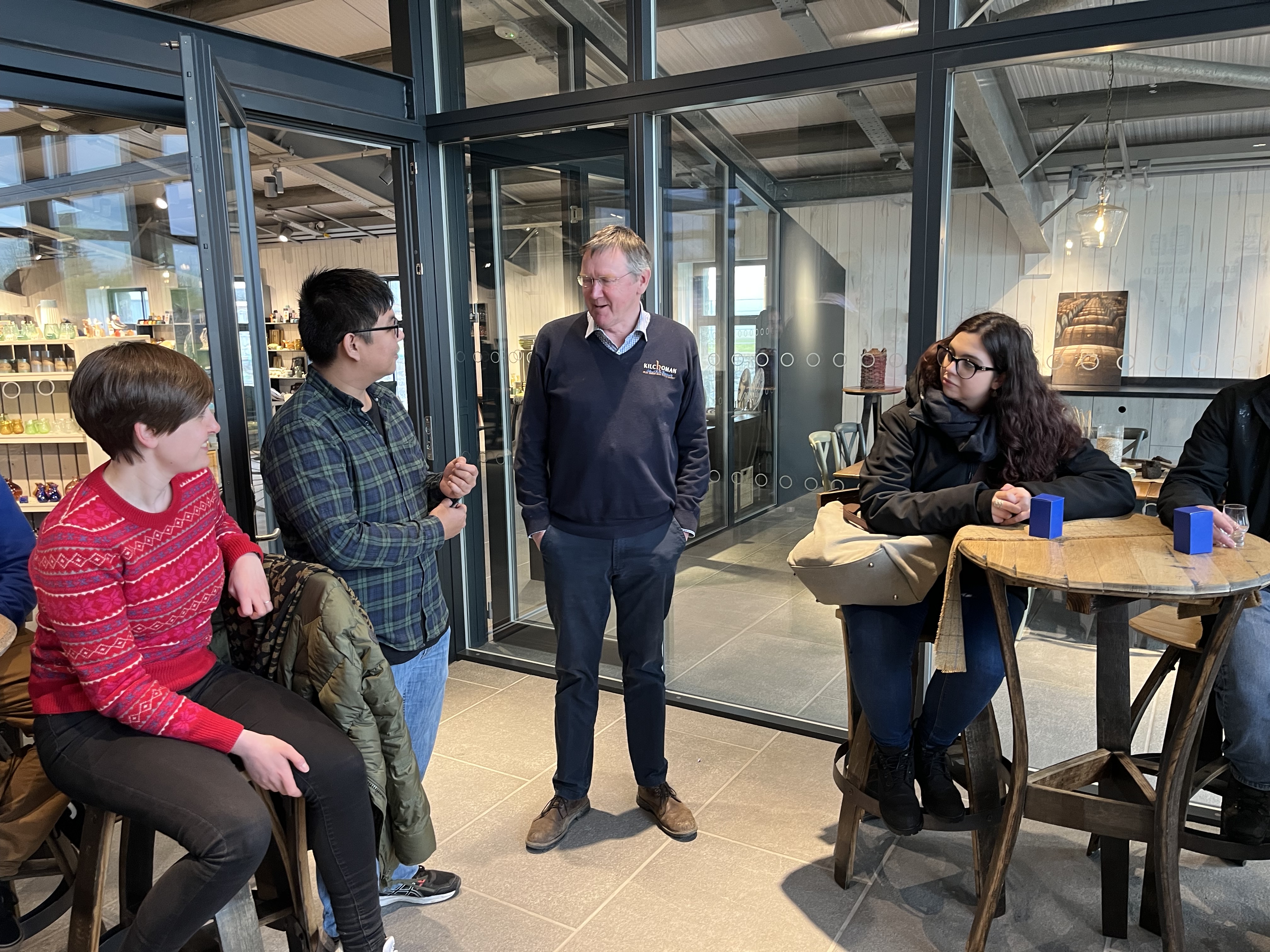
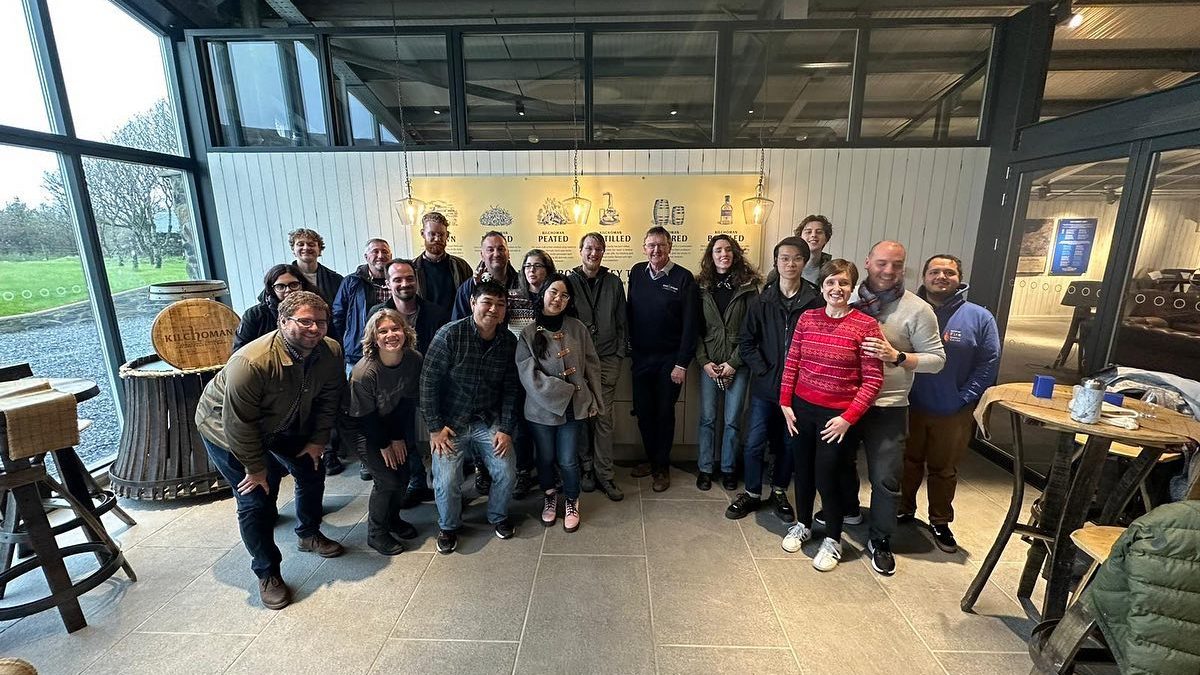
Back in the tasting room, we received some Kilchoman Machir bay whisky, and proceeded to ask the tour guide nerdy questions, to the point when she simply decided to go get the distillery founder himself, Anthony Wills, for us. He was a nice chap, and gave us no-nonsense answers to all our questions. For instance, I asked him about his position on No Age Statement (NAS) whisky, given that Kilchoman’s core range is NAS. He thinks customers should be demanding age statements so they know what they’re getting, but that putting a low age statement on the young Kilchoman simply wouldn’t have worked well for them economically. On the individual casks they state ages, and as the stock gets older (a 16yo is set to release this year) on can maybe expect more of that. He also shared the story of having opened a 30yo Port Ellen (a £4k bottle) and finding it disappointing. Age is not everything.
End to a long day
Back in the town of the hostel, I went to the pub with Zoi who had discovered the joys of playing pool on this trip, and then ended the day with dinner and some drams with the others.
Dram tally
- Islay rum wash 7% – blääääh!
- Islay rum straight from the still
- Islay rum (bottle)
- Islay rum – extra long fermentation time
- Islay rum sherry cask matured 69%
- Lagavulin 8
- Lagavulin 16
- Lagavulin 16 distillers edition
- Lagavulin distillery exclusive
- Ardbeg BizarreBQ
- Kilchoman 100% Islay
- Kilchoman peaty wash
- Kilchoman Machir bay
- Kilchoman new make
- Glen Elgin 16yo (my bottle)
- Murray McDavid Mannochmore

 DuckDrams
Leave a comment